Why foreigners are investing in Panama: the dollar, territorial tax and legal stability
Foreigners invest in Panama for three structural reasons. The US dollar is the working currency, Panama taxes only income produced inside its territory, and foreign owners hold property on the same footing as citizens. These are long-standing features of the system, not temporary promotions.
A dollar economy
The US dollar circulates as legal tender alongside the balboa, which is pegged one to one. For a dollar-based investor, Panama's economy means zero foreign-exchange risk and inflation that has stayed low compared with neighboring countries.[2] Panama also has no currency controls, so rent, dividends and sale proceeds can generally be sent abroad freely.
Territorial taxation
Panama taxes only Panama-source income. Individuals pay progressive rates from 0% to 25%, companies pay 25% on net Panama-source profit, and income earned outside Panama is not taxed at all. The flip side matters for investors. Rent from a Panama apartment, profit from a Panama hotel and gains on Panama land are all Panama-source, so they are taxed here no matter where you live. The tax section below shows how.
Legal protection for foreign capital
Law 54 of 1998 on the Legal Stability of Investments anchors Panama's investment regime. Amendments since 2007 have extended it to sectors such as electricity transmission and multinational headquarters.[3] Panama has also signed bilateral investment treaties with countries including the United States (1982, amended by a 2000 protocol), France (1982) and Finland (2009).[4] Treaties of this kind generally give covered investors access to international arbitration. Whether one covers you depends on your nationality and on how the investment is held.
The economy is built on services, which make up about 75% of GDP. It is anchored by the Canal, the ports, banking and the Colón Free Zone, which is the second-largest free zone in the world after Hong Kong.[2] The US–Panama Trade Promotion Agreement has been in force since October 2012. Panama was removed from the FATF list of jurisdictions under increased monitoring in October 2023.
What gives investors pause
Panama has real risks, and a good adviser names them up front. US investors have raised concerns about corruption and inconsistent treatment by authorities.[2] Growth slowed sharply after the government closed the country's large copper mine in 2023. GDP growth fell to about 1% in 2024 before recovering, and the mine's operator is pursuing a multibillion-dollar claim against the state.
- Tenancy law leans toward tenants, and evictions can take time.
- Panama City has a history of apartment oversupply, and developer yield projections are often optimistic.
- Short-term rentals are restricted in much of Panama City.
- Banks apply strict source-of-funds checks, and opening an account typically takes two to four weeks.
- Government files are in Spanish, so foreign documents need an apostille and a certified translation.
Is Panama still a tax haven? For foreign-source income, Panama still taxes nothing, but secrecy is gone. Companies report their beneficial owners through their resident agent, and banks ask where every dollar came from. Even the residency program requires beneficial-owner documents and proof that the funds came from abroad.[5]
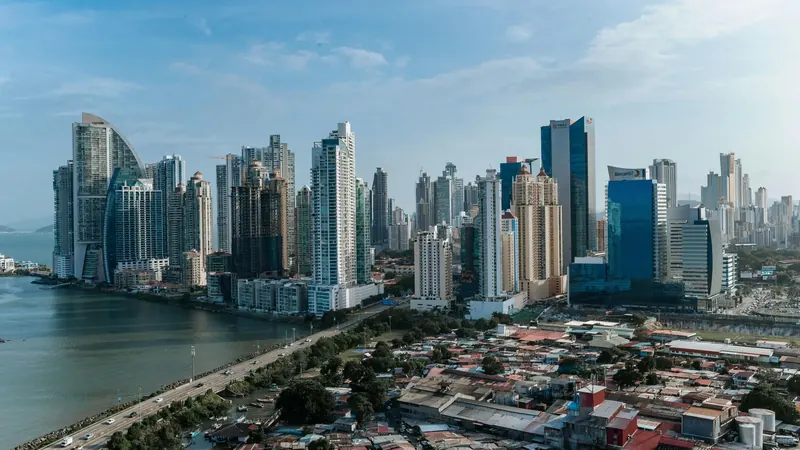
Panama real estate investment, hotels, commercial property and land: the legal checklist for each
Every asset class in Panama starts with the same question: does the seller hold registered title that you can verify? Each class then adds its own checks. Condos have building rules, hotels need tourism registration, commercial property turns on leases and zoning, and land turns on survey and possession issues.
Rules that apply to every foreign investor
- Border zone. Foreign individuals, foreign companies and Panamanian companies with any foreign capital cannot acquire land within 10 kilometers of Panama's borders.[6] Holding the land through a Panamanian corporation does not get around this rule.
- Beachfront. The first 22 meters of beachfront cannot be privately owned.[1] On the Atlantic (Caribbean) coast the public strip is generally 10 meters from the high-tide line. The state can grant use concessions over the strip, but you never get title to it, and permanent structures are generally not allowed.
- Titled property versus Rights of Possession. Titled property (propiedad titulada) is registered in the Public Registry, so it can be searched and mortgaged. Rights of Possession (derechos posesorios) are only a claim to occupy untitled land, usually state land. They are a bet on a future titling process, not ownership. Coastal and island land, including much of what is marketed as Panama island real estate, is often held this way or under concessions.
- No residency needed. You can buy property or own 100% of a company without living in Panama. A local attorney can complete the closing under your power of attorney.
| Asset | What to verify first | Who records or regulates it | Main risk |
|---|---|---|---|
| Resale condo or apartment | Title and liens, building (PH) regulations, HOA arrears, short-term rental limits | Public Registry; the building's PH regulations; Tourism Authority (ATP) for short stays | Paying for a rental model that the building or district does not allow |
| Pre-construction unit | Developer's title to the land, permits, bank guarantee or trust protecting your deposit | Public Registry; municipality; MIVIOT | Delay or developer insolvency with your deposit unprotected |
| Hotel or tourism property | Zoning, construction and occupancy permits, tourism registration, employees and tax history | ATP and the National Tourism Registry; municipality | Buying a business whose incentives or liabilities are not what you were told |
| Office, retail or warehouse | Leases, tenant payment history, permitted use, common charges | Public Registry; municipality | Paying for rent that the lease or tenant cannot sustain |
| Land, farms, development sites | Titled vs possession, survey and boundaries, legal access, water, border zone | Public Registry; ANATI; MIVIOT and municipality for development | Buying a possession claim or a boundary dispute instead of land |
Overview as of October 2026. Each line is explained below.
Residential and condo investment property
On paper the numbers for a Panama investment property in the city are attractive. Gross yields averaged 8.65% for studios and one-bedroom units in Panama City, and one-bedroom yields stood at 7.84% in April 2025.[1] The median asking price for a one-bedroom apartment in Panama City was about USD 215,000.[1]
Those are gross figures. Property management typically takes 10%–15% of rent, and you also pay HOA common charges, property tax, letting commissions, maintenance and the cost of vacant months. After all that, net yields on a city condo often land around 4%–5%. Base your numbers on real comparable leases, not the developer's brochure.
Short-term rental is the trap investors miss most often. In Panama City, rentals of fewer than 45 days are not allowed except in hotels, hotel-associated buildings and mixed-use zones with the required commercial licensing. Fines run from USD 5,000 to USD 50,000, plus possible closure.[1] Many buildings also ban short stays in their PH regulations. Our guide to Airbnb investment and tourism licensing in Panama covers where short stays are allowed.
- Public Registry certificate: registered owner, area, mortgages, liens and easements.
- PH regulations: permitted uses and rental rules, especially minimum stay.
- HOA: no arrears on the unit, current fee, recent increases, pending special assessments or lawsuits.
- Property tax: paid up, plus any exemption and the date it expires.
- Pre-construction: the developer owns the land, holds a construction permit, and protects your deposit (often about 10%) with a bank guarantee or trust. The promise of sale also needs firm delivery dates, penalties and refund terms.
Local mortgages are possible but harder for non-residents. Loan terms are usually 20 years at most, and down payments are higher than in the US, so expect 30% or more.[1] For the step-by-step purchase process from offer to registry, see our guide to buying property in Panama as a foreigner.
Hotels and tourism property
Foreigners can own hotels, boutique lodges and resort land outright, subject only to the border and beachfront rules. The legal work for a Panama hotel investment lies in the permits and in defining exactly what you are buying.
- Asset or company. Most operating hotels sit in a corporation. If you buy the shares, you inherit its employees, tax filings, debts and any tourism registration. If you buy only the building, those stay behind, and the operating business may need to be set up again.
- Zoning and permits. Confirm that hotel use is allowed and that construction and occupancy permits match what was actually built. New or coastal projects also need environmental approval.
- Tourism registration. Law 80 incentives depend on registering the company and project in the National Tourism Registry.[7] Check whether the seller's registration exists, what it covers and when its benefits end.
- Concessions. Beach clubs, docks and overwater structures usually rely on state concessions. Verify the holder, the term and whether the concession can be transferred to you.
- Seasonality. Outside Panama City, occupancy swings with the dry season, so base the price on actual trading history.
Panama commercial real estate
Commercial property includes offices, retail space, warehouses and mixed-use buildings. Buyers either occupy it or buy it for yield, and the two purchases need different questions. Panama City has the deepest market and the widest tenant pool. David is the commercial hub for western Panama, and footfall in Boquete and the beach corridors is seasonal.
- Read every lease in full: term, renewal options, who pays maintenance and utilities, and what happens on a sale.
- Check how long each tenant has traded and whether rent has been paid on time.
- Confirm permitted use with the municipality, especially for food, workshops, or noisy or waste-generating uses.
- Get the current common charges in malls and office towers, plus the last two years of increases.
- Check parking, delivery access and turning space for retail and warehouse units.
Rent from leased property carries 7% ITBMS (Panama's VAT) once the property earns more than USD 3,000 a month or USD 36,000 a year.[1] Commercial buildings pay annual property tax on the same scale as investment homes, from 0.6% to 1.0% on value above the first USD 30,000.[1] For districts, yields and entry prices, see our guide to commercial real estate in Panama City and beyond.
Land, development sites, farms and reforestation
Land is where foreigners lose the most money in Panama, and almost always for the same reason. They bought a possession right, or a badly surveyed parcel, believing it was titled land.
- Confirm the parcel is titled in the Public Registry and that the ANATI cadastral record and survey match the deed.
- Walk the boundaries and identify any occupants. In rural areas, people living on the land can have possession claims.
- Check that access is a registered right of way, not just a track across a neighbor's land, and check the water supply.
- Check the border zone: land in Bocas del Toro, Darién and western Chiriquí can fall inside the 10-kilometer strip.
- For Panama land for development, confirm zoning, MIVIOT and municipal approvals, the environmental study, and how lots can be segregated and sold.
Panama agriculture investment and reforestation products deserve extra care. Reforestation is often sold as a packaged investment starting around USD 80,000–100,000, with promised timber returns, tax benefits or residency. Before you pay, establish three things. First, do you get title to a specific parcel or only a contract share in a plantation? Second, who owns the trees as opposed to the land, and what is the operator's track record? Third, does any residency claim match the current routes, which are built around real estate, securities and bank deposits? Our guide to buying land in Panama: titled land vs Rights of Possession covers the title checks in detail.
Securities and bank deposits
Panama also has a stock exchange, Latinex, with licensed brokerage houses supervised by the Superintendency of the Securities Market, and fixed-term deposits at Panamanian banks. Both are passive investments with little legal work beyond verifying the institution's license. They also matter for residency, as the residency section explains.
Structuring the investment: personal name, company or foundation
You do not need a Panamanian company to invest. Foreigners can buy property and qualify for residency in their own name. A company or foundation earns its cost when you have several properties, partners, an operating business or heirs to plan for.
| Structure | Best for | Panama tax point | US tax treatment | Watch out for |
|---|---|---|---|---|
| Your own name | One or two properties held long term | Rent taxed at individual progressive rates up to 25% | Property itself not reportable; Panama bank accounts are | Heirs go through Panama probate, which can take years |
| Sociedad Anónima (S.A.) | Joint ventures, developments, hotels, several properties | 25% on net Panama-source profit | Per se foreign corporation; US owners file Form 5471 | Annual registry and resident agent costs; beneficial-owner reporting |
| Sociedad de Responsabilidad Limitada (S. de R.L.) | A single rental property or small business with few owners | Taxed as a company in Panama | Generally eligible to elect its US classification | Confirm the US election with your US adviser before forming |
| Private interest foundation (Law 25 of 1995) | Succession and asset protection, usually owning the company that holds the asset | No tax on foreign-source income | Classified on its facts: trust, corporation or other | Generally cannot run a commercial business itself |
| Fideicomiso (Panamanian trust) | Protecting pre-construction deposits, financing, structured closings | Depends on the trust's assets and income | Usually a foreign trust with annual reporting | Licensed trustee fees; complex for US persons |
As of October 2026. US classification depends on your facts and elections, so confirm it with your US tax adviser before you form anything.
When a company makes sense
A company separates the asset's liabilities from your personal estate. It lets several investors hold clear percentages and keeps rental accounting apart from your own. Formation through a licensed resident agent typically takes 5–10 business days, and there is no minimum paid-in capital. We form the company and handle the closing under a power of attorney, so you do not need to travel. Costs, documents and annual obligations are in our guide to Panama company registration for foreigners, and the choice of entity is laid out in Panama corporation vs LLC vs foundation.
Buying the property or buying the company that owns it
Much commercial property and many hotels in Panama are held by corporations, so sellers often offer the shares instead of the building. Law 106 of 1974 taxes transfers of real estate itself.[8] Gains on sales of shares follow a separate regime, including a 5% withholding advance that the buyer reports on Form 108.[9] The bigger issue is liability. When you buy shares, you inherit the company's tax filings, debts, employees and lawsuits, so due diligence must cover the company as well as the property.
Foundations and trusts for succession
A private interest foundation under Law 25 of 1995 is the usual Panamanian tool for passing assets to heirs without probate. It needs an initial endowment of at least USD 10,000. The common layout is a foundation that owns the corporation, which in turn owns the property or business. Setup, cost and reporting are covered in our guide to Panama private interest foundations.
Reporting in your home country
Panama's territorial system does not switch off your home country's taxes. US citizens are taxed on worldwide income. A Panamanian S.A. is on the IRS list of per se corporations, so it cannot elect to be treated as a pass-through entity.[10] US owners of a Panama company generally file Form 5471. Panama bank accounts can trigger FBAR filing once they exceed USD 10,000 in aggregate at any time in the year, as well as Form 8938. Canadian residents have their own foreign-property reporting with the CRA. Settle the structure with your home adviser before you buy, because changing it afterward costs more. Our guide to Panama taxes for expats covers the cross-border rules.

How investment returns are taxed in Panama
Panama taxes the income your Panama assets produce, meaning rent, business profit and capital gains, and charges a modest annual property tax. It does not tax your income from outside Panama.
Rent and business income
Individuals pay progressive income tax of up to 25% on Panama rent. Companies pay 25% on net Panama-source profit, and companies with taxable income above USD 1.5 million must compare that with 4.67% of gross income and pay the higher figure. For rental companies, planning figures often use an effective rate of about 15.76% on rental income.[1] Your actual rate depends on deductions, so we model it for each case. Dividends that a Panama company pays from Panama-source profit generally carry 10% withholding, and dividends paid from foreign-source profit generally carry 5%.
Annual property tax
Investment, commercial and industrial properties pay a progressive annual tax on the value recorded in the Public Registry.[1] A primary residence is exempt on the first USD 120,000 of registered value.[1] Many new buildings are also exempt on their improvements for years, as the incentives section explains.
| Registered value (investment property) | Rate on that band | Tax on a USD 300,000 property |
|---|---|---|
| USD 0–30,000 | 0% | USD 0 |
| USD 30,001–250,000 | 0.6% | USD 1,320 |
| USD 250,001–500,000 | 0.8% | USD 400 |
| Over USD 500,000 | 1.0% | USD 0 |
| Total | About USD 1,720 a year |
Rates as of October 2026, assuming no exemption applies. Properties under an improvement exemption pay only on the land value.
When you sell: transfer tax and capital gains
Law 106 of 1974 charges a 2% transfer tax on the higher of the deed price or the cadastral value. The cadastral value is updated by 5% for each full year the seller held the property.[8] The seller is the legal taxpayer. The notary cannot attest the deed, and the Public Registry will not register it, without proof that the tax has been paid.[8] The tax is declared on DGI Form 106.[11] Contracts sometimes shift it to the buyer, so read that clause before you sign.
The law includes useful exemptions. Transfers between spouses and between parents and children are exempt.[8] So is the first sale of new homes whose occupancy permits were issued between January 1, 2017 and August 1, 2025.[8]
Capital gains on Panama real estate are declared on Form 107 and must be paid before the sale is registered, within the same calendar month as the transaction.[12] If you sell at or below your purchase price, no tax is due; if there is a gain, the tax is 10% of it.[13] In practice the seller pays 3% of the higher of the sale price or cadastral value at closing. The seller can accept that 3% as final, or file for the 10% on the actual gain and reclaim the difference, though refunds are slow. Companies also file Form 107, whether or not the sale is part of their ordinary business.[12] A company that trades real estate as its business may face ordinary corporate tax instead, so confirm the treatment before you sell. The line-by-line detail is in our guide to Panama property taxes and closing costs.
Incentives for foreign investors: tourism Law 80, SEM and new-construction exemptions
Panama's main investment incentives are the tourism regime of Law 80 of 2012, the SEM regime for multinational headquarters under Law 41 of 2007, and the property tax exemption on new construction. Sector zones such as the Colón Free Zone and Panamá Pacífico add more. As of October 2026, the most generous Law 80 benefits are closed to new registrations, which many investment pitches leave out.
| Regime | Who it is for | Main benefits | Status, October 2026 |
|---|---|---|---|
| Tourism Law 80 of 2012, Article 4 as amended by Law 82 of 2019 | Hotels and tourist lodging outside the Panama district, from B/.250,000 new build (B/.100,000 for remodeling or in indigenous areas) | 15 years without income tax or property tax; 5–10 years without import duties | Registration deadline passed on December 31, 2025; a new regime is in draft |
| Tourism tax credit (Law 122 of 2019) | Investors in bonds or shares of qualifying tourism companies outside the Panama district | Amount invested counts as a 100% income tax credit | Available until December 31, 2025 |
| SEM regime, Law 41 of 2007 | Multinational groups running a regional headquarters that serves their own group | Income tax exemption on services to foreign group entities; staff visas without work permits | In force, administered by MICI |
| New-construction exemption, Law 61 of 2002 | Owners of new buildings with construction permits issued from 2004 | 5–15 years without property tax on improvements, depending on value and use | In force; PH units still pay 1% on land value |
Status as of October 2026. Benefits depend on registration and continued compliance; we confirm a project's status before you rely on it.
Tourism Law 80 of 2012
Law 80 of 2012 declares tourism a national priority. It grants tax incentives to companies that register new tourist accommodation in the National Tourism Registry.[7] Law 82 of 2019 rewrote Article 4 for projects outside the Panama district, with minimum investments of B/.250,000 for new construction and B/.100,000 for new construction in indigenous areas or for remodeling and equipment.[14] Qualifying projects received 15 years of exemption from property tax on land and improvements, and 15 years of exemption from income tax on the tourism activity.[14] Import duties on construction materials were waived for five years, and on furnishings and equipment used in the lodging for ten years.[14]
Most of Law 80's original articles expired on December 31, 2017. The incentives in Articles 4, 5, 9 and 10 were extended only to December 31, 2025.[15] A related Law 122 of 2019 credit for investing in tourism company bonds and shares ran to the same date.[16] In 2026 the Tourism Authority published a draft bill for a new incentive regime with a single tourism window, but it is a draft, not law.[17]
Do not buy a hotel project on the strength of Law 80 benefits without seeing the registration. Companies that registered in time generally keep their benefits for the terms granted. A project that missed the December 31, 2025 deadline cannot obtain them under the current text.
SEM regime for regional headquarters
Law 41 of 2007 created the special regime for headquarters of multinational companies (SEM) and a licensing commission to administer it.[18] It has since been amended by Law 45 of 2012 and Law 57 of 2018.[19] SEM license holders are exempt from Panama income tax on services to group entities abroad that generate no taxable income in Panama.[18] A SEM must serve its own business group, so firms that serve outside clients, such as law firms, are excluded.[20] Gains on transfers of SEM shares are taxed at a flat 2%.[20]
In practice, a group needs at least USD 200 million in assets or at least seven subsidiaries served to obtain a license. Since the 2018 amendment, the services income is generally taxed at a reduced 5% rate. Staff receive five-year renewable visas and do not need work permits.[21] The SEM must file an annual sworn report with audited financial statements within six months of its year end, and late filing draws fines of B/.5,000 to B/.50,000.[21] SEM, the Colón Free Zone and Panamá Pacífico are compared in our guide to setting up a regional headquarters in Panama.
Property tax exemption for Panama real estate development
New buildings are exempt from property tax on their improvements from the date of the occupancy permit, for construction permits issued from January 1, 2004.[22] Residential improvements get 15 years up to B/.100,000, 10 years from B/.100,000 to B/.250,000, and 5 years above that. Other improvements, such as commercial buildings, get 10 years up to B/.100,000 and 5 years above.[22] The 20-year exemptions you may see quoted applied only to permits issued before 2004.[22] Units under the condominium (PH) regime still pay 1% on the land value while the improvements are exempt.[23]
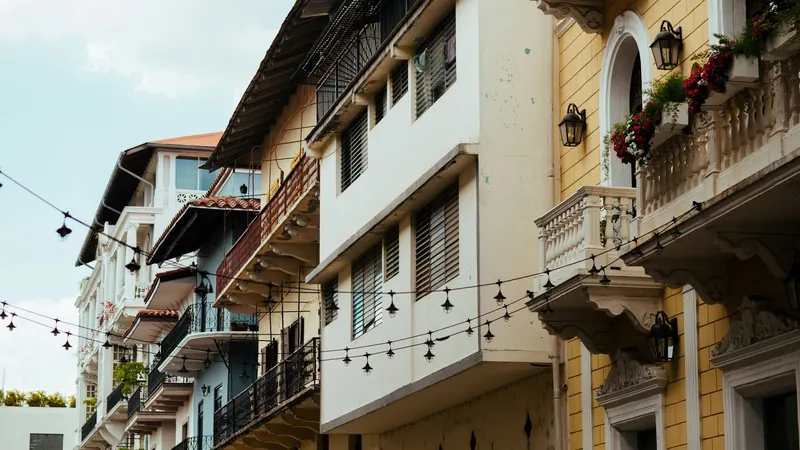
Does investing in Panama give you residency?
Yes, if the investment fits one of the immigration routes. The fastest is the Qualified Investor visa, often called the Panama golden visa, which grants permanent residency directly. Since September 2026 it runs under a new decree.
Executive Decree 17 of September 8, 2026 replaced Executive Decree 722 of 2020 and all its amendments.[24] Under the new decree, in force since September 16, 2026, the minimum is USD 300,000 for new first-sale real estate, with no end date, and USD 500,000 for resale property.[25] It also adds a route through fixed-term deposits of at least USD 500,000 at Banco Nacional de Panamá or Caja de Ahorros.[26] Earlier decrees set different amounts.
If you signed a binding purchase contract before September 16, 2026, you can generally still file under the previous rules at USD 300,000 until mid-March 2027. We confirm this for each file. The securities route through a licensed Panamanian brokerage has required USD 500,000; confirm its current terms before you plan around it.
The process has two stages. The Ministry of Commerce and Industries (MICI) certifies the investment and sends the certification to the National Migration Service.[27] On paper, MICI has up to 15 business days for the certification and Migration up to 30 business days for the residency resolution. For real estate, the file includes a current Public Registry certificate and an ANATI certification. A purchase promise must be backed by a bank guarantee or a trust, and you must prove the funds came from abroad.[5] You must keep the investment for five years and visit Panama at least once every two years.[5]
The investment can be held through a company if you file its registry record and beneficial-owner documents.[5] Because the residency file depends on the property file, we handle both in one engagement, so the deed, the registry certificate and the MICI certification line up. Thresholds, costs and family members are covered in our guide to the Panama golden visa and Qualified Investor route.
Other routes exist. The Friendly Nations visa for citizens of listed countries can be based on a job or a property purchase, and the Pensionado visa is based on a lifetime pension. Panama has no citizenship-by-investment program. Permanent residents can generally apply for naturalization after five years, subject to other requirements.
Due diligence before you invest: what we check
Due diligence in Panama means proving four things before your money moves. The seller owns what they are selling, the asset is free of liens and disputes, its permits match its use, and the contract protects your deposit. Title insurance is not common in Panama, so this review is your main protection.
- Ownership and liens
We pull a current Public Registry certificate showing the registered owner, area, mortgages, liens, easements and any recorded lawsuits or annotations. - Cadastre and boundaries
We check the ANATI cadastral record and the survey against the deed. For land, we confirm the boundaries on the ground and identify any occupants. - Seller's authority
If a company sells, we verify its registry record, directors, powers of attorney and beneficial owner. For individuals, we confirm marital status and any heirs whose consent is needed. - Permits and permitted use
We review zoning, construction and occupancy permits and the PH regulations. Where relevant, we also check tourism registration, concessions and environmental approvals. - Taxes and charges
We confirm property tax is paid and whether an exemption applies and until when, and we check HOA arrears and pending special assessments. - Leases and operations
For commercial property and hotels, we review leases, tenant records, employees, contracts and the company's tax filings if you are buying shares. - The contract
We draft or negotiate the promise of sale: price, conditions, dates and penalties, who pays the transfer tax, and how the deposit is protected by a bank guarantee, trust or escrow. - Closing and registration
The public deed is signed before a notary, taxes are paid, and ownership passes when the deed is registered in the Public Registry. From accepted offer to registration typically takes 30–90 days.
Ask for the finca (property) number and the seller's full legal name. With those two items we can pull the registry certificate quickly and tell you whether the deal is worth pursuing before you sign anything or wire a dollar.
We do all of this remotely. You sign a power of attorney, we report what we find in plain English, and you decide whether to proceed. The work is quoted as a fixed fee after a short consultation. You can reach us through the contact options at the end of this page. More on scope is in our page on title and due diligence by a Panama real estate lawyer.
What closing and due diligence cost
| Item | Typical cost on a USD 300,000 property | Notes |
|---|---|---|
| 2% transfer tax (Law 106 of 1974) | USD 0 to you, or USD 6,000 if you agree to pay it | Legally the seller's tax; check the contract clause |
| Capital gains tax (3% advance or 10% of gain) | USD 0 to you | Paid by the seller; you pay it when you sell |
| Notary fees | USD 300–750 (0.1%–0.25%) | For the public deed |
| Public Registry registration | USD 600–1,500 (0.2%–0.5%) | Ownership passes on registration |
| Legal fees: title search, due diligence, contract, closing | USD 1,500–6,000 (market range 0.5%–2%) | RG quotes a fixed fee after a short consultation |
| Agent commission | USD 0 to you | Paid by the seller, usually 3%–5% |
| Total buyer closing cost | About USD 2,500–8,500 (roughly 1%–3%) | Add USD 6,000 if you take on the transfer tax, and about USD 1,720 a year in property tax if no exemption applies |
Figures as of October 2026 for a resale property bought in your own name. Taxes are statutory; notary, registry and legal fees are market ranges. Company formation, residency filing and lender costs are extra if they apply.
Have us handle it
Get legal due diligence on a Panama investment
A Panamanian lawyer reviews your situation and replies within 24 hours with next steps and a fixed-fee quote.