Panama allows foreigners to own titled land with the same legal rights as Panamanian citizens — no residency requirement, no nationality restriction on most parcels, and no cap on the number of properties you may hold. That openness is genuine, but it coexists with a land registry system where a significant share of rural and coastal parcels are not titled at all. They are held under a parallel regime called derecho posesorio — Rights of Possession (ROP) — and the two systems carry fundamentally different legal weight, risk profiles, and transaction costs. Confusing them is the single most common and most expensive mistake foreign buyers make in Panama.
This guide covers every layer of the decision: the legal distinction between titled land and ROP, a step-by-step due diligence checklist, foreign ownership restrictions by zone, the full cost breakdown, beachfront and coastal rules, tax obligations, and how to vet the attorney who will protect your investment. For a broader overview of Panama's property market — including residential apartments, commercial assets, and tourism investments — see our Panama real estate guide for foreign investors. If you're specifically interested in residential property investment, our residential real estate for foreigners guide covers apartments, condominiums, and homes with neighborhood-specific yield data and financing options.
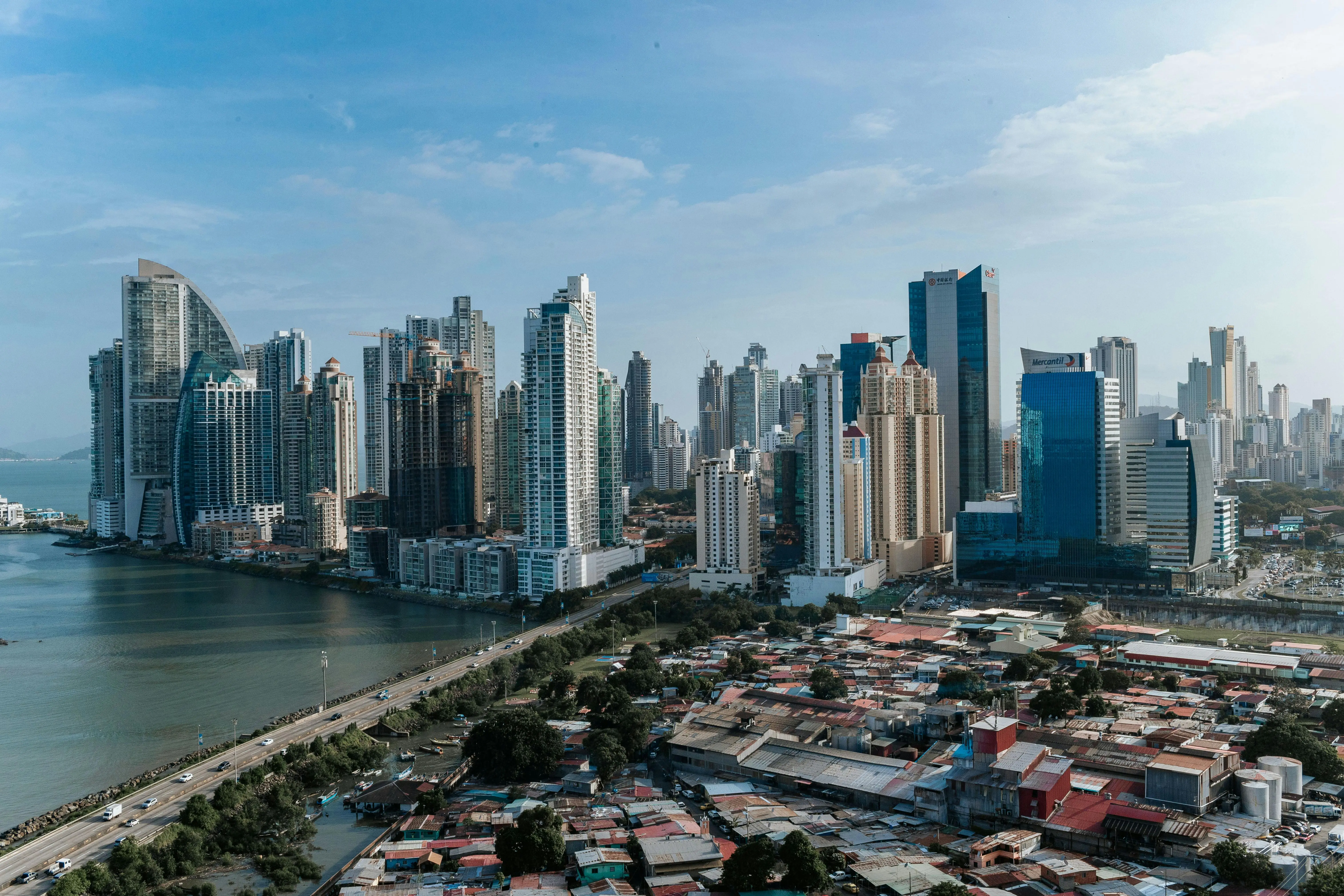
Can Foreigners Own Land in Panama?
Yes — and the legal framework is more permissive than in most Latin American countries. Panama's Constitution and the Civil Code grant foreign nationals the same property rights as Panamanian citizens for titled real estate. You do not need a visa, residency permit, or local partner to purchase titled land in your own name. You may own multiple parcels, develop them, lease them, mortgage them, and pass them to heirs under Panamanian succession law.
The only constitutional restriction on foreign ownership applies to titled land within 10 kilometers of an international border (the Costa Rica border to the west and the Colombia border to the east). That restriction is discussed in detail in the restrictions section below. Outside those border zones, and outside protected indigenous territories and national parks, the entire country is open to foreign ownership of titled property.
Practically speaking, popular investment corridors — Panama City, Coronado, Boquete, Pedasí, Playa Venao, Bocas del Toro, and the Azuero Peninsula — are all outside the border exclusion zone and contain substantial inventories of titled land available to foreign buyers. If you are considering a residential purchase rather than raw land — condominiums, apartments, or built homes — our residential real estate guide for foreigners covers those markets and neighborhoods in detail.
Titled Land vs. Rights of Possession: The Core Distinction
This is the most consequential legal distinction in Panama real estate, and it is the one most frequently glossed over in listing descriptions and casual conversations. Understanding it precisely will determine whether your investment is legally secure or fundamentally precarious. (For a broader overview of real estate law and this distinction in the context of apartments, commercial property, and other asset types, see our comprehensive Panama real estate guide for foreign investors.)
Titled Property (Propiedad Titulada)
Titled property is land that has been formally adjudicated by the Panamanian state and registered in the Registro Público de Panamá (Public Registry). Each titled parcel carries a unique finca number — a property identification number that links to a digital and physical file containing the chain of title, registered encumbrances, mortgages, liens, easements, and the current owner's name. Anyone can verify this information online through the Public Registry's portal or in person at a Registry office.
Key legal attributes of titled property:
- Full fee-simple ownership equivalent — the closest analogue to freehold ownership in common-law systems.
- Eligible for mortgage financing from Panamanian and international banks.
- Subject to property tax (impuesto de inmueble) — though significant exemptions apply to primary residences and new construction.
- Transferable by public deed (escritura pública) registered at the Public Registry, providing constructive notice to all third parties.
- Protectable against third-party claims through the registered title chain.
- Eligible for subdivision, development permits, and utility connections without the complications that affect ROP land.
Rights of Possession (Derecho Posesorio / ROP)
ROP is a legally recognized but fundamentally different regime. The underlying land is owned by the Panamanian state. What the "possessor" holds is not ownership but a documented right to occupy and use government land — a right that can be transferred to third parties, including foreigners, but that does not constitute title.
The historical origin of ROP dates to the agrarian reform policies of General Omar Torrijos (who governed Panama from 1968 to 1981). His government encouraged settlement of frontier land under the principle: occupy the land, improve it, and you earn the right to possess it. That right became transferable and, over decades, commercially traded — often at prices that approach or match titled land values in desirable coastal areas, despite the legal inferiority of the interest being sold.
Key legal attributes of ROP property:
- The state retains underlying ownership; the possessor holds a use-and-occupation right only.
- ROP certificates are not registered in the Public Registry. There is no central database. Agricultural ROP certificates may be filed with the Ministry of Agricultural Development (MIDA); coastal and marine ROP certificates may be held by the Directorate General of the Surveyor within the Ministry of Economy and Finance. Other ROP land has no centralized registry at all.
- Cannot be mortgaged. No Panamanian bank will lend against an unregistered possessory right.
- Exempt from property tax — because the state, not the possessor, is the legal owner.
- Verification requires contacting multiple agencies: regional Catastro offices, the local Alcaldía (Mayor's office), and Corregidurías (local justices of the peace).
- Competing claims are common and difficult to resolve without litigation.
Not sure whether the land you are considering is titled or ROP? A title search takes 24–48 hours and can prevent years of legal disputes.
Request a Title VerificationWe search the Registro Público and advise on next steps — in English.
Why ROP Land Is Risky for Foreign Investors
ROP land is not inherently illegal, and some investors do purchase it deliberately — typically at a price discount and with a conversion plan. But the risks are specific, serious, and disproportionately affect foreign buyers who lack local networks and institutional knowledge. Here is what the listing brochure will not tell you.
1. No Central Registry Means No Reliable Chain of Possession
Because ROP is not registered in the Public Registry, there is no authoritative record of who holds the right and whether it has been transferred before. A seller may present a possession certificate that is outdated, duplicated, or fraudulent. Verifying the chain requires physical visits to multiple government offices across different agencies — and those offices may have incomplete or inconsistent records.
2. Competing Claims Are Common
In rural and coastal areas, it is not unusual for two or more parties to hold documents purporting to cover the same parcel. Without a central registry, there is no mechanism that automatically flags overlapping claims the way the Public Registry does for titled land. Disputes end up in court, and litigation in Panama can take years.
3. The State Can Reclaim the Land
Because the government owns the underlying title, it retains the legal authority to reclaim ROP land for public use — infrastructure projects, protected area expansions, or rezoning — without the same compensation obligations that apply to expropriation of titled property. This risk is not theoretical: coastal development projects have displaced ROP possessors with limited recourse.
4. No Mortgage Financing
Every major Panamanian bank — Banco Nacional, Banistmo, BAC, Global Bank, Multibank — requires a registered title as collateral for a mortgage. If you purchase ROP land, you pay cash. If you later need liquidity, you cannot borrow against the asset. This constraint also suppresses the resale market: your future buyer pool is limited to cash purchasers willing to accept the same risks you accepted.
5. Abandonment Defeats the Right
ROP is premised on active possession. If you purchase ROP land and leave it unoccupied and unimproved for an extended period, a third party can establish a competing possession claim by physically occupying the parcel. Foreign buyers who purchase remotely and visit infrequently are especially exposed to this risk. Active management — regular inspections, visible improvements, posted signage — is essential to maintaining the possessory right.
6. Development and Utility Permits Are Complicated
Construction permits from the Ministry of Housing (MIVIOT) and utility connections from IDAAN (water), Union Fenosa/Gas Natural (electricity), and cable providers typically require a registered title or at minimum a formal concession document. ROP land often cannot satisfy these requirements, which means building legally on ROP land requires additional administrative steps that can delay or block development.
Converting ROP to Titled Property: Process, Timeline, and Cost
Many ROP parcels can be converted to titled property through a formal adjudication process administered by the Autoridad Nacional de Administración de Tierras (ANATI — National Land Administration Authority). If you are considering purchasing ROP land with the intention of converting it, understanding this process before you buy is essential.
Is Conversion Possible?
Not all ROP land is eligible. Conversion is blocked or severely complicated when the parcel falls within:
- A national park or protected area under the jurisdiction of the Ministry of Environment (MiAmbiente).
- An indigenous territory (comarca) — these areas have their own land governance frameworks and titled adjudication to non-indigenous persons is generally not available.
- The public maritime-terrestrial zone (a state-owned strip measured from the high-tide line, whose exact width must be verified for the specific parcel — see the beachfront section).
- Land reserved for public infrastructure or state use.
Before purchasing ROP land with a conversion plan, your attorney must confirm that the specific parcel is eligible for adjudication under ANATI's current land-use classifications.
The Conversion Process
- Topographic survey: A licensed surveyor (agrimensor) prepares a certified survey of the parcel with GPS coordinates, boundaries, area, and a description of existing improvements. This survey must comply with ANATI's technical specifications.
- ANATI application: The possessor (or their attorney) files a formal adjudication petition with the regional ANATI office, attaching the survey, the existing possession certificate, identity documents, and evidence of continuous, peaceful possession.
- Administrative review: ANATI reviews the file, conducts a field inspection, and checks for overlapping claims or land-use conflicts.
- Publication and opposition period: ANATI publishes notice of the adjudication petition in the official gazette (Gaceta Oficial) and in a local newspaper for a statutory period during which third parties may file objections.
- Adjudication resolution: If no opposition is sustained, ANATI issues an adjudication resolution and the parcel is assigned a finca number and registered in the Public Registry.
- Payment to the state: The possessor pays the state for the land at a government-assessed value, which is typically well below market value.
Timeline and Cost
Following government reforms in 2012 that streamlined the ANATI process, conversion now typically takes between 6 months and 18 months for uncomplicated parcels — down from the 3–5 years that was common before the reforms. Complex cases involving boundary disputes, environmental overlaps, or indigenous proximity can take considerably longer.
Costs include the surveyor's fee (typically $800–$2,500 depending on parcel size and access), attorney fees for the adjudication process ($1,500–$4,000 for a standard case), ANATI administrative fees, and the state land payment (calculated on cadastral value, usually modest for rural parcels). Budget a total of $3,000–$8,000 for a straightforward conversion, excluding any litigation costs if a competing claim emerges.
Critical point: Do not purchase ROP land on the assumption that conversion is a formality. Confirm eligibility, obtain a written legal opinion, and factor the full conversion cost and timeline into your investment analysis before signing a purchase agreement.
Foreign Ownership Restrictions by Zone and Province
Panama's restrictions on foreign land ownership are narrower than in most of the region, but they are real and must be verified for any specific parcel.
The 10-Kilometer Border Rule
Panama's Constitution prohibits foreigners — and Panamanian corporations with foreign participation — from owning titled land within 10 kilometers of the country's international borders. This affects two corridors:
- Western border: The 10-kilometer strip along the Costa Rica border, which runs through Chiriquí Province and affects parcels near Volcán, Río Sereno, and parts of the Tierras Altas highlands.
- Eastern border: The 10-kilometer strip along the Colombia border in Darién Province.
Two important nuances apply. First, as noted above, the prohibition technically does not apply to ROP land because the state retains underlying ownership — though purchasing ROP in a border zone for the purpose of circumventing the restriction carries its own legal risks. Second, enforcement of the 10-kilometer rule has historically been inconsistent; some foreigners hold titled land inside the zone registered in their own names. However, the legal risk of expropriation without compensation is real and not worth accepting for most investors. The safe course is to purchase at least 10 kilometers from any international border, or to hold through a properly structured Panamanian entity if you have specific reasons for a border-zone investment — and only after obtaining a formal legal opinion.
Island Property
A constitutional restriction that previously prohibited foreign ownership of island property was eliminated in 2006. Foreigners may now purchase titled land on Panamanian islands, provided the island is not within 10 kilometers of an international border. Bocas del Toro's islands, the Pearl Islands (Archipiélago de las Perlas), and Isla Cébaco are all open to foreign ownership of titled parcels.
Indigenous Territories (Comarcas)
Panama has five legally recognized indigenous comarcas: Guna Yala (San Blas), Emberá-Wounaan, Ngäbe-Buglé, Madungandí, and Wargandí. Land within these territories is governed by indigenous customary law and comarca statutes. Foreigners cannot purchase or hold titled land inside a comarca. Some foreigners have entered into informal use agreements with indigenous communities, but these carry no legal protection and are not recognized by Panamanian courts. Avoid any transaction that purports to sell land inside a comarca to a foreigner.
National Parks and Protected Areas
Panama has an extensive system of protected areas administered by the Ministry of Environment (MiAmbiente), covering approximately 30% of national territory. Private titled land within park boundaries can exist and be sold, but development is severely restricted. ROP land inside protected areas cannot be converted to title. Before purchasing any parcel in a rural or coastal area, verify its status against MiAmbiente's protected area registry.
Buying near the coast, a border, or in a rural province? A zone-clearance opinion from a qualified attorney takes 3–5 business days and eliminates the most common ownership risk.
Request a Zone Clearance OpinionBilingual attorneys. Fixed-fee opinions. No surprises.
Beachfront and Coastal Land: Special Legal Rules
Beachfront land in Panama is legally distinct from inland parcels, and the distinction matters enormously for foreign buyers. Panama's Law 2 of 2006 and the earlier Law 80 of 1941 establish a maritime zone framework that limits private ownership at the water's edge.
The Maritime Zone
Panama law designates a strip along the coast measured from the mean high-tide line as the zona marítimo-terrestre — the maritime-terrestrial zone. The innermost portion of this strip is state property and generally cannot be privately titled or sold to anyone, Panamanian or foreign; it must remain publicly accessible. The exact width of the public strip can vary by coast and by the applicable regulation, so the precise measurement for any given parcel must be verified.
Immediately inland from the public strip there is typically a further zone that can be subject to a concesión — a government concession granting the right to use and develop the land for a fixed term (commonly around 20 years, renewable). A concession is not ownership; it is a time-limited use right granted by the state. Concessions can be transferred, but the transfer generally requires government approval and does not convey title.
Beyond the concession zone, land can usually be titled and privately owned in the normal way. Many beachfront developments are structured so that the titled parcels begin beyond the concession strip, with the developer holding a concession for the intermediate zone. Always have your attorney confirm exactly where the public zone, the concession zone, and titled land begin for the specific property before you commit.
Setback Requirements
Even on titled beachfront land beyond the public maritime zone, construction setback requirements imposed by MIVIOT and municipal authorities typically prohibit building within a defined distance of the high-tide line. Setback distances vary by municipality and zone classification. Verify the applicable setback before purchasing any beachfront parcel with development intent.
What "Beachfront" Listings Actually Mean
When a listing describes land as "beachfront" in Panama, it may mean any of the following: (a) titled land immediately behind the concession zone with beach access; (b) a concession parcel within the maritime-terrestrial zone; (c) ROP land at the coast with no formal government documentation; or (d) a combination. Each carries a different legal character, different development rights, and different risk. Always require your attorney to specify exactly what interest is being transferred before proceeding.
Bocas del Toro Specifics
Bocas del Toro is frequently cited as a high-risk area for land purchases, and for good reason. The archipelago has a high concentration of ROP land, overlapping indigenous claims (Ngäbe-Buglé territory borders the province), proximity to the Costa Rica border, and a history of competing possession claims. Foreign buyers have lost investments in Bocas due to all of these factors. If you are considering Bocas del Toro, the due diligence requirements are more intensive than anywhere else in Panama, and the margin for error is smaller. Many investors in the archipelago pursue tourism-licensed properties rather than raw land — the Panama tourism real estate guide explains the Law 80 incentive framework and concession structures that apply to eco-lodges and resort developments in the region.
Due Diligence Checklist for Buying Land in Panama

Due diligence for titled land and ROP land differ significantly. Both are covered below. The checklist for ROP is longer because the absence of a central registry requires verification across multiple agencies.
Due Diligence for Titled Land
- Obtain the finca number and run a Public Registry search. The search (available online at registro.gob.pa or through your attorney) confirms: current registered owner, full chain of title, registered mortgages and liens, easements, restrictions, and any pending annotations. Request a certificación de gravámenes (encumbrance certificate) dated within 30 days of closing.
- Verify the survey (plano catastral). The survey must be signed and stamped by a licensed surveyor registered with the Junta Técnica de Ingeniería y Arquitectura. Confirm that the survey matches the Public Registry description in terms of area, boundaries, and location. For rural parcels, hire an independent surveyor to walk the boundaries on-site and confirm they match the registered survey. Boundary disputes are common where surveys are old or where neighboring parcels have been subdivided.
- Check the cadastral value (valor catastral) with the Ministry of Economy and Finance. The cadastral value is the government's assessed value, which is used to calculate property tax and transfer tax. Confirm it is current and consistent with the property description.
- Verify property tax status. Request a paz y salvo (tax clearance certificate) from the Ministry of Economy and Finance confirming that all property taxes are paid to date. A transfer cannot be registered without a current paz y salvo.
- Check utility accounts. Verify that water (IDAAN), electricity, and any other utility accounts associated with the property are current. Unpaid utility balances can create complications at closing.
- Verify zoning and land use. Confirm the parcel's zoning classification with the relevant municipal authority and with MIVIOT. Verify that your intended use (residential, commercial, agricultural, tourism) is permitted under current zoning. Check whether any zoning change applications or infrastructure projects affecting the parcel are pending.
- Environmental status check. Confirm with MiAmbiente that the parcel is not within a protected area, buffer zone, or subject to environmental restrictions. For coastal parcels, obtain a maritime zone certification confirming the distance from the high-tide line.
- Verify access. Confirm that the parcel has legal access to a public road. Landlocked parcels exist in Panama; verify that any access easement is registered in the Public Registry. Unregistered access agreements are unenforceable against future owners of the servient land.
- Search for pending litigation. Your attorney should search the judicial system for any pending cases involving the property or the seller that could affect title.
- Verify seller identity and authority. If the seller is an individual, verify identity against their cédula (national ID) or passport. If the seller is a corporation or foundation, verify that the entity is in good standing with the Public Registry and that the signatory has authority to convey the property.
Additional Due Diligence Steps for ROP Land
- Identify which agency holds the ROP certificate. Agricultural ROP: MIDA. Coastal/marine ROP: Directorate General of the Surveyor (MEF). Other ROP: contact regional Catastro, Alcaldía, and Corregidurías.
- Obtain a certified copy of the original ROP certificate from the issuing agency and verify that the current seller's name matches the certificate or that a valid chain of transfers is documented.
- Commission an independent survey and compare boundaries against the ROP certificate description. Discrepancies are common and must be resolved before purchase.
- Conduct a physical inspection for competing occupants. Walk the entire parcel. Any evidence of third-party occupation — structures, crops, fencing by others — must be investigated and resolved before closing.
- Assess ANATI eligibility for conversion if conversion is part of your plan. Obtain a written legal opinion on eligibility before committing to purchase.
- Verify absence of protected area overlap through MiAmbiente and ANATI's land classification maps.
Red Flags That Should Stop a Transaction
- Seller cannot produce the original title deed or ROP certificate.
- The Public Registry shows a lien, mortgage, or annotation that the seller did not disclose.
- The registered area differs materially from the area described in the listing or in the seller's representations.
- The seller insists on closing without a paz y salvo or without a full title search.
- The parcel is described as "in the process of being titled" — this means it is currently ROP, and you should treat it as such.
- The seller or their agent discourages you from hiring independent legal counsel.
- The price is substantially below comparable titled land in the same area without a clear explanation.
- Any part of the parcel falls within a comarca boundary or within a national park buffer zone.
Full Cost Breakdown: Beyond the Purchase Price
Foreign buyers accustomed to US or Canadian real estate transactions are sometimes surprised by Panama's closing cost structure. The total acquisition cost for titled land typically runs 3–5% above the purchase price, distributed as follows.
Transfer Tax (Impuesto de Transferencia de Bienes Inmuebles)
Panama levies a transfer tax of 2% on the higher of the registered cadastral value or the transaction price. This tax is paid by the seller in most transactions, but the allocation is negotiable and should be specified in the purchase contract. In practice, many sellers price this cost into the asking price, so buyers should understand who is contractually responsible.
Capital Gains Tax (Impuesto sobre la Renta por Ganancia de Capital)
The seller pays a capital gains tax of 10% on the net gain from the sale (sale price minus acquisition cost and improvements). As a buyer, this affects you indirectly: a seller with a large embedded gain may factor this liability into price negotiations. As a future seller, you will face this obligation. The tax is withheld at closing and remitted to the Dirección General de Ingresos (DGI).
Public Registry Registration Fees
The deed must be registered at the Public Registry. Registration fees are calculated on a sliding scale based on the transaction value, typically ranging from $150 to $600 for most residential and rural land transactions. Your attorney will advise on the specific fee for your transaction.
Notary Fees
All real estate transfers in Panama require a public deed executed before a notary public (Notaría Pública). Notary fees are regulated by law and typically range from $200 to $500 depending on the complexity and length of the deed.
Legal Fees
Attorney fees for a standard titled land purchase — including due diligence, contract review, deed preparation, and registration — typically range from $1,000 to $2,500 for straightforward transactions. Complex transactions, ROP purchases, or those involving corporate structures will cost more. Some attorneys charge a percentage of the transaction value (typically 1–1.5%); others charge fixed fees. Clarify the fee structure in writing before engaging counsel.
Survey and Appraisal
A licensed surveyor's fee for a boundary verification on a rural parcel typically runs $500–$2,000 depending on parcel size, terrain, and access. A formal appraisal (avalúo) by a certified appraiser, if required for financing or for establishing the transaction value for tax purposes, typically costs $300–$800.
Escrow Fees
Use of a licensed escrow company to hold purchase funds pending closing is strongly recommended for transactions above $50,000. Escrow fees are typically 0.5–1% of the transaction value, with a minimum of $500–$750.
Summary Table
All figures are indicative. Actual costs depend on transaction specifics. Request a written cost estimate from your attorney before signing the promise-to-purchase agreement.
Tax Implications for Foreign Land Buyers
Panama's tax treatment of real estate is generally favorable by international standards, but foreign buyers need to understand three distinct tax obligations: property tax during ownership, capital gains tax on disposition, and income tax on rental revenue.
Property Tax (Impuesto de Inmueble)
Panama levies an annual property tax on titled land based on the registered cadastral value, and the applicable scale depends on how the property is classified. Two progressive scales generally apply:
Primary residence / family tax patrimony (patrimonio familiar tributario):
- Cadastral value up to $120,000: exempt.
- $120,001–$700,000: approximately 0.5% per year.
- Above $700,000: approximately 0.7% per year.
Other property (second homes, commercial, and most raw land):
- Cadastral value up to $30,000: exempt.
- $30,001–$250,000: approximately 0.6% per year.
- $250,001–$500,000: approximately 0.8% per year.
- Above $500,000: approximately 1.0% per year.
Most raw land held for investment will fall under the "other property" scale rather than the primary-residence scale. New residential construction may qualify for a temporary exemption from property tax for a period set by law, running from the date of construction permit issuance — a potential incentive for buyers who plan to build. Because these rates, thresholds, and exemption periods are adjusted periodically, confirm the current figures and the classification that applies to your specific parcel with your attorney before relying on them.
ROP land is generally exempt from property tax, because the state is the legal owner. This is sometimes cited as an advantage of ROP, but the exemption reflects the absence of ownership, not a genuine tax benefit.
Capital Gains Tax on Resale
When you sell titled land in Panama, the net gain (sale price minus acquisition cost, documented improvements, and transaction costs) may be subject to capital gains tax — under current law generally at a rate of around 10% of the net gain, though rates and calculation methods can change. The tax is withheld at closing by the notary and remitted to the DGI. There is no distinction between short-term and long-term gains — the rate is flat at 10% regardless of holding period. Panama does not impose a separate withholding tax on foreign sellers beyond this capital gains mechanism, but you should consult a tax advisor in your home country regarding how Panama-sourced gains are treated under your domestic tax law.
Rental Income Tax
If you lease your Panama land or any structure on it, the rental income is subject to Panama income tax. For individuals, this generally falls under Panama's progressive personal income tax schedule (broadly 0% on the first ~$11,000 of net taxable income, 15% up to ~$50,000, and 25% above that), while Panamanian companies are generally taxed at the 25% corporate rate. The applicable rate and the withholding mechanics can depend on whether the owner is resident or non-resident and on how the property is held, so confirm the current treatment for your situation with a tax advisor. Panama taxes only Panama-source income — income earned outside Panama is not subject to Panamanian income tax, which is one of the country's principal tax advantages for foreign investors.
Value Added Tax (ITBMS)
The sale of bare land is generally not subject to Panama's ITBMS (value added tax, currently 7%). The sale of constructed property may attract ITBMS on the construction component in certain commercial transactions. Confirm with your attorney and tax advisor whether ITBMS applies to your specific transaction.
Ownership Structures: Personal Name vs. Corporation vs. Foundation

Foreign buyers can hold Panama land in their own name or through a legal entity. Each structure has implications for privacy, succession, liability, and tax. There is no single correct answer — the right structure depends on your specific circumstances. For a comprehensive analysis of how foundations and corporations interact with estate planning, see our complete inheritance tax and estate planning guide. Note that land intended for commercial development — office parks, retail, or industrial facilities — has additional considerations covered in our Panama commercial real estate guide, including leasing structures and corporate holding arrangements specific to income-producing assets.
Personal Name
Holding titled land in your own name is the simplest structure. It provides direct ownership, straightforward succession (through a Panama will or by operation of law), and no ongoing corporate maintenance costs. The disadvantage is full personal liability exposure if the property is involved in litigation, and the fact that your ownership is publicly visible in the Public Registry.
Panamanian Corporation (Sociedad Anónima)
Holding land through a Panamanian corporation is the most common structure for foreign investors. Advantages include liability insulation, potential privacy (bearer shares were abolished in 2015 but nominee director structures remain available), and the ability to transfer the property by transferring shares rather than executing a new deed — which can reduce transfer tax exposure in some circumstances. Annual maintenance costs include a registered agent fee (typically $300–$500/year) and a government annual franchise tax ($300/year). Corporate ownership is advisable for ROP land, as it provides an additional layer of legal separation.
Panama Private Interest Foundation (Fundación de Interés Privado)
A Panama Private Interest Foundation is a flexible estate planning and asset protection vehicle that can hold real estate. Foundations are particularly useful when the primary goal is succession planning — ensuring that the property passes to designated beneficiaries without going through probate in Panama or in your home country. The foundation structure also provides strong asset protection against creditor claims in many scenarios. Annual costs are comparable to a corporation. For investors with multiple Panama assets or complex succession objectives, a foundation holding a corporation that holds the property is a common and effective structure.
Deciding between personal name, corporation, and foundation ownership? The right structure can reduce your tax exposure and protect the asset across generations.
Discuss Your Ownership StructureWe advise on both the legal and tax dimensions — in English.
How to Vet Your Panama Real Estate Attorney
Every competitor page tells you to "hire an experienced attorney." None of them tells you how to evaluate one. Here is what actually matters.
Verify Bar Registration
All attorneys practicing in Panama must be registered with the Órgano Judicial (Judicial Branch) and the Colegio Nacional de Abogados de Panamá (National Bar Association). You can verify an attorney's registration status through the Judicial Branch's online registry at organojudicial.gob.pa. Do not retain an attorney who cannot provide their bar registration number or whose registration you cannot verify.
Confirm Real Property Law Experience
Panama law practice is not formally divided into specialties the way US or UK practice is, but attorneys do develop substantive expertise in specific areas. Ask directly: how many real estate transactions did the attorney handle in the past 12 months? How many involved rural or coastal land? How many involved ROP transactions or ANATI adjudications? A competent real estate attorney should be able to answer these questions specifically and should be familiar with the current practices of the Registro Público, ANATI, and the relevant municipal authorities in the area where the property is located.
Insist on Independent Representation
Never use the same attorney as the seller or the developer. This is standard advice in any jurisdiction, but it is particularly important in Panama where the same attorney sometimes represents both sides of a transaction — a practice that creates an obvious conflict of interest. Your attorney's sole obligation should be to protect your interests.
Understand the Fee Structure Before Engaging
Obtain a written fee agreement before the attorney begins any work. The agreement should specify: the scope of services, the fee amount or calculation method, what is included (due diligence, contract review, deed preparation, registration), and what is billed separately (survey coordination, ANATI filings, litigation if required). Attorneys who are vague about fees or who resist a written engagement letter are a red flag.
Assess Language Capability Honestly
If you do not read Spanish, you need an attorney who can communicate fluently in English and who will provide you with English summaries of key documents. All legal documents in Panama are executed in Spanish, but your attorney should be able to explain every material provision to you in your language. Do not sign documents you cannot understand.
Red Flags in Attorney Selection
- The attorney is introduced to you by the seller or the seller's agent and you have no independent connection to them.
- The attorney discourages a full title search or due diligence, citing time pressure or the seller's impatience.
- The attorney cannot explain the ROP/titled distinction clearly and specifically.
- The attorney recommends you sign a promise-to-purchase agreement before completing due diligence.
- The attorney cannot provide references from foreign clients on comparable transactions.
Step-by-Step Purchase Process for Titled Land
Once you have identified a parcel, confirmed it is titled, and retained independent legal counsel, the purchase process follows a defined sequence. Understanding each step prevents delays and protects your deposit.
- Negotiate price and terms. Agree on purchase price, deposit amount, due diligence period, closing date, and allocation of closing costs. Do not pay any money until a written contract is in place.
- Execute a Promise to Purchase Agreement (Promesa de Compraventa). This is a binding preliminary contract that locks the property while due diligence is completed. Your attorney prepares it; it should specify the due diligence period (typically 30–60 days), the deposit amount (typically 5–10% of the purchase price), conditions for refund of the deposit if due diligence reveals a problem, and the closing date. Register this contract with the Public Registry to give constructive notice to third parties that the property is under contract.
- Complete due diligence. Execute every item on the due diligence checklist above during the contractual due diligence period. Do not waive or shorten this period under seller pressure.
- Arrange funds and escrow. Wire purchase funds to a licensed Panama escrow company. Do not wire funds directly to the seller or to the seller's attorney. The escrow company holds funds and disburses only upon confirmation that all closing conditions are satisfied.
- Execute the Purchase-Sale Deed (Escritura Pública de Compraventa). Your attorney prepares the deed, which is executed before a notary public. Both buyer and seller (or their attorneys-in-fact under a power of attorney) must sign. The deed incorporates the property description, purchase price, representations and warranties, and the transfer of title.
- Obtain the paz y salvo. The seller must provide a current tax clearance certificate from the Ministry of Economy and Finance. This is a legal prerequisite for registration of the transfer.
- Register the deed at the Public Registry. Your attorney submits the executed deed and supporting documents to the Public Registry. Registration commonly takes around 5 to 15 business days, though processing times can vary. Upon registration, the Public Registry issues a new certificate showing you as the registered owner and assigns (or updates) the finca number.
- Escrow release. Once registration is confirmed, the escrow company releases funds to the seller and the transaction is complete.
Frequently Asked Questions
Can a US citizen buy land in Panama?
Yes. US citizens have the same property rights as Panamanian citizens for titled land anywhere in Panama outside the 10-kilometer border zones and indigenous territories. No visa or residency is required. The purchase process is the same as for any foreign national.
What is the difference between titled land and rights of possession in Panama?
Titled land is registered in Panama's Public Registry with a deed and a unique finca number; you hold full ownership. Rights of possession (ROP) means the state owns the land and you hold a documented right to occupy and use it. ROP cannot be mortgaged, is not registered in the Public Registry, and carries significantly higher legal risk. The distinction is the most important legal concept in Panama land transactions.
How long does it take to buy land in Panama?
For titled land, a straightforward transaction from signed promise-to-purchase to completed registration often takes roughly 45 to 90 days for a straightforward transaction. Due diligence takes 2–4 weeks; deed execution and notarization takes 1–3 days; Public Registry registration takes 5–15 business days. Complex transactions or those requiring corporate structures take longer.
Can foreigners buy beachfront land in Panama?
Foreigners can own titled land on the coast, but a public maritime-terrestrial strip measured inland from the high-tide line is state property and cannot be titled. Immediately inland from that public strip there is typically a further zone that can only be held under a government concession, not full title; titled beachfront parcels begin beyond the concession zone. The exact width of the public and concession zones varies by coast and by the applicable regulation, so always have an attorney confirm the precise boundaries and the exact legal character of any coastal parcel before purchasing.
What are the closing costs when buying land in Panama?
Total closing costs for a buyer typically run 2–4% of the purchase price, including attorney fees ($1,000–$2,500), Public Registry fees ($150–$600), notary fees ($200–$500), survey costs ($500–$2,000), and escrow fees (0.5–1%). The seller pays the 2% transfer tax and 10% capital gains tax, though allocation is negotiable. Request a written cost estimate from your attorney before signing any contract.
Is it safe to buy ROP land in Panama?
ROP land can be purchased legally, but it carries material risks: no central registry, competing claims, no mortgage financing, state reclamation risk, and development permit complications. Foreign buyers should only purchase ROP land with experienced independent legal counsel, a clear conversion pathway confirmed in writing, and a full understanding that the investment cannot be mortgaged and may be harder to resell.
How do I verify a land title in Panama?
Titled land can be verified online through the Public Registry portal at registro.gob.pa using the finca number, or through your attorney who can pull a certified encumbrance certificate (certificación de gravámenes). This search confirms the current owner, the chain of title, and all registered encumbrances. The search should be run within 30 days of closing.
What is the 10-kilometer rule in Panama?
Panama's Constitution prohibits foreigners and corporations with foreign participation from owning titled land within 10 kilometers of the country's international borders (Costa Rica to the west, Colombia to the east). The restriction does not technically apply to ROP land. Enforcement has been inconsistent historically, but the legal risk of owning titled land inside the zone is real. The safest approach is to purchase outside the 10-kilometer corridor.
Can I buy land in Panama through a corporation?
Yes. Holding land through a Panamanian corporation is common and provides liability insulation, potential privacy, and flexibility in transferring the asset. Annual corporate maintenance costs are approximately $600–$800/year. Corporate ownership is particularly recommended for ROP land and for investors holding multiple properties.
How long does it take to convert ROP to titled land in Panama?
Following the 2012 ANATI reforms, conversion of eligible ROP parcels often takes approximately 6 to 18 months for uncomplicated cases. Complex cases involving boundary disputes, environmental overlaps, or proximity to indigenous territories can take considerably longer. Total conversion costs typically range from $3,000 to $8,000, excluding litigation costs if a competing claim arises.
What taxes do foreigners pay on Panama land?
During ownership, property tax applies to titled land at progressive rates (0.6%–1.0% of cadastral value annually; exempt up to $30,000 cadastral value). On sale, capital gains tax is 10% of net gain, withheld at closing. Rental income is subject to Panama income tax — generally the progressive personal income tax rates for individuals, or the 25% corporate rate for companies — with the exact treatment depending on residency and how the property is held. ROP land is exempt from property tax because the state holds underlying title.
Should I use a Panama Private Interest Foundation to hold land?
A Panama Private Interest Foundation is well-suited for investors whose primary goals are succession planning and asset protection. The foundation designates beneficiaries who receive the asset outside of probate proceedings, in Panama and potentially in your home country. For investors with simpler objectives, a corporation is sufficient. For complex multi-asset or multi-generational situations, a foundation holding a corporation that holds the land is a common and effective structure.
Do I need a lawyer to buy land in Panama?
Panama law does not require a buyer to retain an attorney for a real estate transaction, but proceeding without one is inadvisable. The attorney conducts the title search, prepares the promise-to-purchase agreement, reviews the deed, coordinates with the notary, and registers the transfer at the Public Registry. For foreign buyers unfamiliar with Panamanian law and Spanish-language documents, independent legal representation is essential, not optional.
Can foreigners buy land in Bocas del Toro?
Foreigners can purchase titled land in Bocas del Toro, but the province requires more intensive due diligence than most areas of Panama. It has a high concentration of ROP land, proximity to the Costa Rica border (triggering the 10-kilometer rule for some parcels), overlapping Ngäbe-Buglé indigenous territory claims, and a history of competing possession disputes. Engage an attorney with specific Bocas del Toro experience and budget additional time and cost for due diligence.
Ready to Buy Land in Panama? Start with the Right Legal Foundation.
Our attorneys have advised foreign investors on Panama land transactions for over 25 years — from title searches and due diligence to corporate structuring and ANATI adjudications. We work in English, charge transparent fixed fees, and represent buyers only.
Schedule a ConsultationObarrio, Panama City · info@rglawfirmpa.com · +507 6570-4232