Panama Residential Real Estate for Foreigners: Apartments, Condominiums & Houses
Panama's residential market offers rental yields of 5–8%, sustained appreciation, and access to residency. We guide you from property search to closing.
Panama Residential Real Estate for Foreigners: The Complete Investment Guide
Foreigners can buy residential real estate in Panama with ownership rights nearly identical to those of Panamanian citizens. Panama's constitution guarantees the right to private property to all persons, regardless of nationality, and the Public Registry system provides the same legal protection to foreign-held titles as to domestically held ones. There are no foreign ownership quotas, no special government approvals required before purchase, and no restrictions on repatriating sale proceeds. Those three facts alone distinguish Panama from most of its regional peers.
This guide covers every material dimension of residential investment in Panama for foreign buyers: the legal framework, condo ownership law, neighborhood-level return data, financing from Panamanian banks, the full tax picture, closing costs, residency visa integration, and the red flags that cause deals to fail. If you are evaluating Panama as a residential investment destination, the sections below give you the specific numbers and legal references you need to make an informed decision. For a broader overview of Panama's real estate market across all property types, see our comprehensive guide to Panama real estate law for foreign investors, which covers commercial, tourism, and other specialized property categories. If you are considering raw land or agricultural properties, see our detailed guide to buying land in Panama as a foreigner. For questions about passing residential property to heirs or estate planning involving Panama apartments and homes, consult our complete guide to Panama inheritance tax and estate planning.
Foreign ownership rights and legal framework
Panama's legal framework for foreign property ownership is among the most permissive in Latin America. Article 44 of the Political Constitution of Panama establishes the right to private property without distinguishing between nationals and foreigners. This constitutional protection is reinforced at the statutory level and applied uniformly by the Public Registry (Registro Público de Panamá), the government body that records all property titles.
What foreigners can and cannot own
Foreigners may purchase, in their own name or through a legal entity, any titled residential property in Panama: condominiums, apartments, single-family homes, townhouses, villas, and titled land. For detailed analysis of land acquisition specifically, including titled land versus Rights of Possession and the full due diligence process, see our guide to buying land in Panama as a foreigner. There is no cap on the number of properties a foreigner may hold, and buildings may be 100% foreign-owned — a more permissive rule than in many other jurisdictions in the region.
Three categories of restriction apply:
- Border zone: Under Panama's Constitution, foreigners cannot own titled property within 10 kilometers of an international border. This affects areas near the Costa Rica border (including parts of Puerto Armuelles) and the Colombian border. Panama City, Boquete, Coronado, Pedasí, and Bocas del Toro are entirely outside this restriction.
- Beachfront public zone: A public maritime-terrestrial strip measured inland from the mean high-tide line cannot be privately owned; titled beachfront properties begin beyond this public zone, and structures within it require a government concession (concesión) rather than a title. The exact width of the public strip can vary by coast and regulation, so verify the precise measurement for any specific coastal parcel.
- Indigenous territories (Comarcas): Land within legally recognized indigenous territories is not available for private purchase by anyone outside the relevant indigenous community.
Island property is a separate legal category. A constitutional restriction that previously limited foreign ownership of island property was eliminated by a 2006 reform, and Law 2 of 2006 also provides for state land concessions on islands and coastlines for tourism use. Foreigners may now hold titled island property in many cases, but because some islands are concession-only or fall within other restricted zones, any island purchase requires project-specific legal review before commitment.
Titled property vs. Right of Possession
The single most important legal distinction for foreign buyers is between titled property (registered in the Public Registry with full legal protection) and Right of Possession (ROP) land, where the government technically holds the underlying title. ROP land carries significant legal risk: it can be invaded, it cannot be used as mortgage collateral at most banks, and conversion to full title is a lengthy administrative process with no guaranteed outcome. Foreign buyers should purchase titled property exclusively, and should verify title status directly in the Public Registry before signing any agreement. Buyers specifically interested in purchasing raw or agricultural land — rather than built residential property — should consult our in-depth guide to buying land in Panama as a foreigner, which covers the ROP conversion process, border zone restrictions, and the full due diligence checklist specific to land acquisitions.
Need a title search and legal due diligence before you commit?
Our attorneys verify title status, encumbrances, and zoning directly in Panama's Public Registry.
Request a consultationResponse within one business day.
Propiedad Horizontal: how condo ownership works in Panama
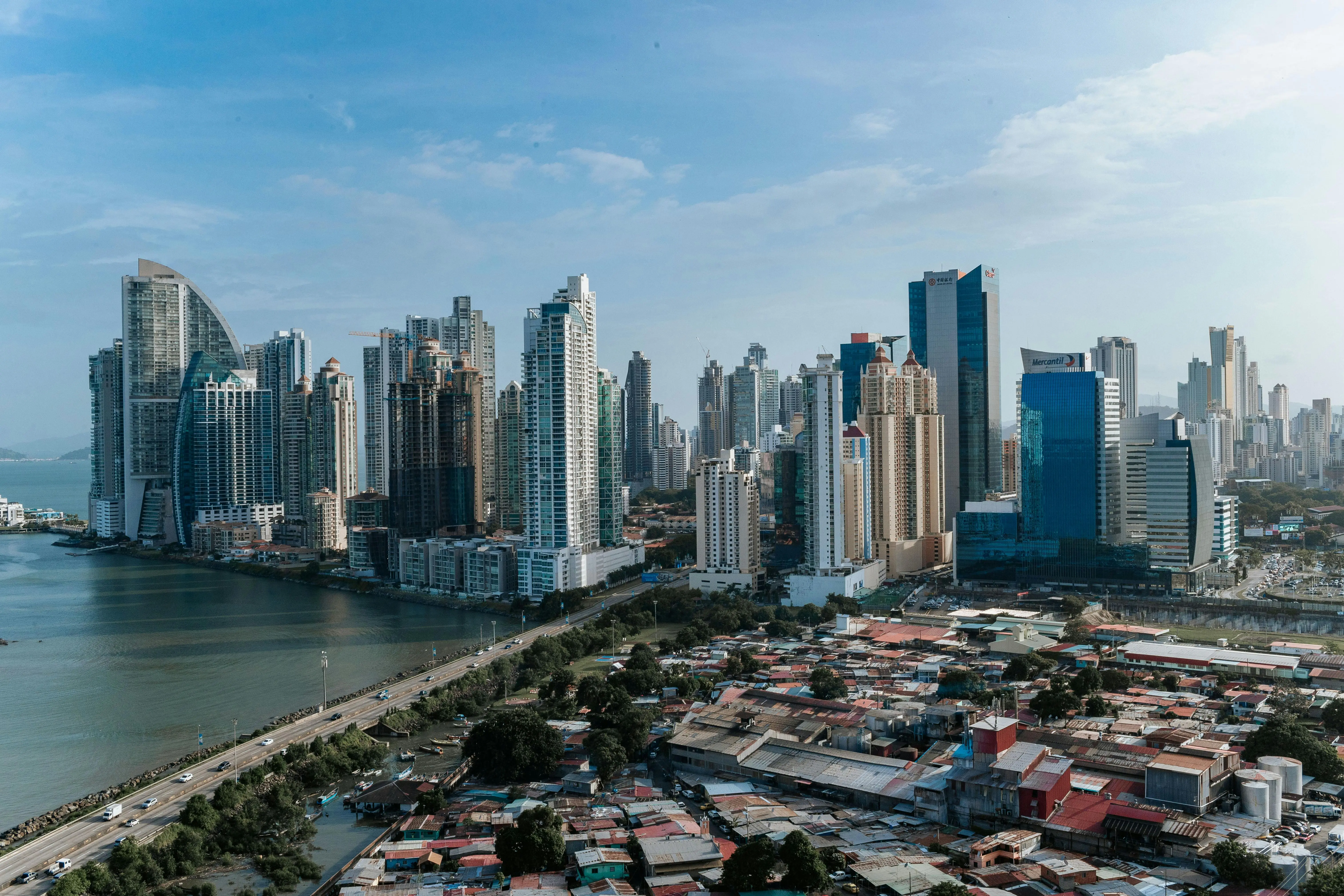
The vast majority of residential investment in Panama City involves condominiums governed by Propiedad Horizontal (horizontal property) law. Understanding this framework is essential before buying a condo in Panama, because it determines your rights over common areas, your financial obligations, and your recourse when disputes arise.
The legal basis
Panama's horizontal property regime is governed primarily by Law 31 of June 18, 2010 (Ley 31 de 2010, que regula el Régimen de Propiedad Horizontal), which replaced the earlier Law 13 of 1993. Law 31 of 2010 establishes the rules for the creation, administration, and dissolution of horizontal property regimes and applies to all residential and mixed-use buildings registered under this system.
What you own and what you share
Under Propiedad Horizontal, your purchase gives you two distinct types of property rights:
- Private unit (unidad privada): Your apartment or condo unit is registered as an independent titled property in the Public Registry, with its own folio number. You hold full ownership of this unit and can sell, mortgage, or lease it independently.
- Undivided share of common areas (bienes comunes): You own a proportional, undivided share of lobbies, elevators, pools, gyms, parking structures, and building systems. This share is expressed as a percentage (coeficiente de copropiedad) and determines your vote in the owners' assembly and your proportional contribution to common expenses.
The owners' assembly and administration
Law 31 of 2010 requires every horizontal property building to have an Asamblea de Propietarios (owners' assembly) as its supreme governing body, and a Junta Directiva (board of directors) elected by the assembly. The board appoints or contracts an administrator (administrador). Foreign owners have full voting rights in the assembly proportional to their coeficiente. Decisions on ordinary administration require a simple majority; decisions on structural modifications or changes to the horizontal property declaration require a qualified majority, typically two-thirds.
Monthly maintenance fees
Each owner pays a monthly cuota de mantenimiento (maintenance fee) calculated on the basis of their coeficiente and the building's annual operating budget. In Panama City, these fees range from approximately $0.50 to $2.50 per square meter per month depending on the building's amenity level, age, and management quality. A 100 m² unit in a mid-range building typically carries fees of $150–$250 per month; a luxury high-rise with concierge, multiple pools, and 24-hour security can reach $400–$600 per month for the same area. Unpaid fees accrue interest and can result in a lien on the unit.
Dispute resolution
Disputes between owners or between an owner and the administration are first addressed through the assembly process. If unresolved, Law 31 of 2010 provides for mediation and, ultimately, civil court jurisdiction. Panama's civil courts handle horizontal property disputes under ordinary civil procedure, which can be slow. For this reason, reviewing the building's reglamento de copropiedad (co-ownership regulations) and the financial health of the reserve fund before purchase is as important as reviewing the title itself.
If you are evaluating a specific building, our team can review the horizontal property declaration, the co-ownership regulations, and the most recent assembly minutes as part of a comprehensive real estate purchase due diligence engagement.
Neighborhood investment analysis and rental yield data
Rental yield and capital appreciation in Panama vary materially by district. The figures below are derived from market data current as of early 2026 and reflect long-term (12-month) residential leases unless otherwise noted. Short-term rental yields are higher in some areas but subject to additional licensing requirements and seasonal volatility.
Panama City: primary investment districts
Punta Pacifica and Punta Paitilla: These adjacent oceanfront districts host the highest concentration of luxury high-rises in the country. Asking prices for titled condos range from approximately $2,500 to $4,500 per square meter. Long-term rental yields typically fall between 4.5% and 6% gross annually. Demand is driven by multinational executives, embassy staff, and medical professionals (Hospital Punta Pacifica, affiliated with Johns Hopkins Medicine, is located here). Vacancy rates for well-maintained units are low, generally under 8%.
Costa del Este: Panama City's planned business district, approximately 20 minutes east of the historic center. Costa del Este attracts corporate tenants and upper-middle-income families. Purchase prices range from $1,800 to $3,200 per square meter. Gross rental yields run 5%–7%, with strong demand from multinational companies that maintain regional offices in the area. The district's master-planned infrastructure and flood-resistant design command a premium over comparable units elsewhere.
Avenida Balboa and Bella Vista: The Cinta Costera waterfront corridor offers ocean views at prices between $1,500 and $2,800 per square meter. Rental yields of 5%–6.5% are achievable. The area is well-established, walkable, and convenient to the financial district, which sustains consistent tenant demand.
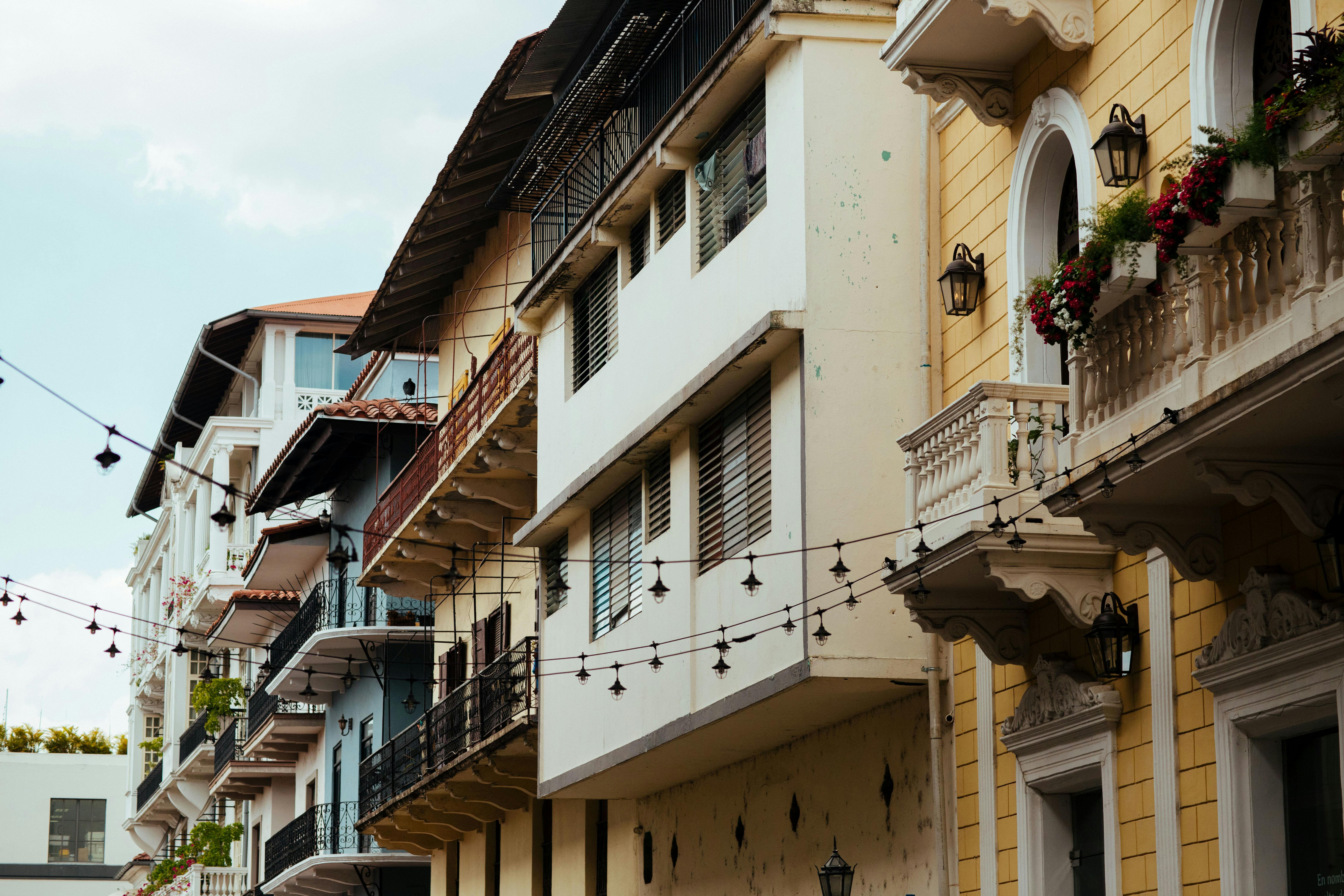
Casco Viejo (San Felipe): Panama's UNESCO-listed historic district is a specialized market. Restored colonial properties command prices from $2,000 to over $5,000 per square meter for premium units. Short-term rental yields can reach 8%–10% gross for well-positioned apartments with tourist-use approval, but the licensing process is specific to this district and requires verification. Long-term rental demand is thinner than in the business districts. Capital appreciation has been strong over the past decade as restoration activity has accelerated, but the market is illiquid — exit timelines are longer.
San Francisco and El Cangrejo: These established residential districts offer entry-level investment at $1,200–$2,000 per square meter. Gross yields of 6%–8% are common for smaller units (studios and one-bedrooms) targeting young professionals and students. These neighborhoods have the highest rental liquidity in the city for sub-$200,000 properties.
Clayton and Albrook: Former U.S. Canal Zone territory, now a planned residential area with wide streets, green space, and proximity to the City of Knowledge technology park. Prices range from $1,400 to $2,200 per square meter. Demand from NGO staff, academics, and tech sector employees supports yields of 5.5%–7%. Larger investors in Clayton and Albrook sometimes acquire mixed-use properties or commercial components within residential buildings; for analysis of Panama's commercial real estate market, see our Panama commercial real estate investor's guide.
Outside Panama City
Coronado (Pacific coast): Approximately 80 km west of Panama City, Coronado is the dominant beach investment market for the capital's middle and upper-middle class. Condo prices range from $1,000 to $2,000 per square meter. Short-term rental yields can reach 7%–9% during high season (December–April), but annual averages are lower due to pronounced seasonality. Best suited to buyers who will also use the property personally.
Boquete (Chiriquí highlands): A retirement and eco-tourism market at 1,200 meters elevation. Purchase prices are significantly lower than in Panama City — $800–$1,500 per square meter for quality properties. Long-term rental demand from the established expat community is consistent, but the market is small and illiquid. Appreciation has been moderate. Best suited to lifestyle-driven buyers or those targeting the retiree rental segment.
Bocas del Toro: A high-risk, high-potential market. Waterfront and near-water properties attract tourism-driven short-term rental demand. Titled property is scarcer here than in other regions — a significant proportion of land in the archipelago is ROP. Thorough title verification is mandatory. Gross yields on legitimately titled, well-managed properties can exceed 9%, but management costs and vacancy outside peak season are substantial. For investors interested in the tourism hospitality side of this market, see our Panama tourism real estate investment guide, which covers Law 80 incentives and tourism-specific property structures.
Considering a specific neighborhood or building?
Our real estate legal team can review the title, the horizontal property declaration, and the seller's documentation before you make an offer.
Learn about our purchase servicesFinancing for foreign buyers: banks, rates, and requirements
Mortgage financing for foreign buyers is available in Panama but is more restrictive than what most North American or European buyers are accustomed to. The key parameters as of early 2026 are as follows.
Loan-to-value ratios
Panamanian banks typically lend foreign non-residents up to 70% of the appraised value of a titled residential property, meaning a minimum down payment of 30% is required. Some banks reduce this to 65% LTV for non-residents, particularly for properties above $500,000. Panamanian residents (including foreigners with valid residency) may access up to 80% LTV under standard residential mortgage programs. Developers of new projects sometimes offer in-house financing at 80%–90% LTV during the pre-sale phase, but these arrangements carry their own risks (see the red flags section below).
Interest rates
Mortgage interest rates for foreign buyers at Panamanian banks currently range from approximately 6.5% to 8.5% per annum, depending on the lender, the borrower's financial profile, and the loan term. Panama's banking system is dollarized, so there is no currency risk for US dollar earners. Loan terms typically extend to 20–25 years for residential mortgages. Variable-rate products tied to the prime rate are available but less common for foreign borrowers than fixed-rate structures.
Which banks lend to non-residents
Several banks in Panama's licensed banking center offer mortgage products to foreign non-residents, including Banistmo (affiliated with HSBC), Banco General, Global Bank, and Multibank. Each institution has its own underwriting criteria. Notably, Panamanian lenders evaluate creditworthiness primarily on demonstrated income and asset documentation rather than on foreign credit bureau scores, which they cannot access. This can be advantageous for buyers with strong income but limited formal credit history in their home country.
Required documentation
A standard mortgage application for a foreign non-resident buyer requires: a valid passport; two years of income tax returns or equivalent income documentation from the home country; three to six months of bank statements; a letter of employment or proof of business ownership; a property appraisal by a bank-approved appraiser; and a clean title report. Banks also conduct anti-money-laundering due diligence under Panama's Law 23 of 2015, which requires documentation of the source of funds.

Comparison to home-country financing
Foreign buyers who can access equity in their home-country properties often find that borrowing against those assets at lower rates (e.g., a home equity line of credit in the US at current rates) and purchasing in Panama with cash produces a better overall cost of capital than a Panamanian mortgage. This approach also simplifies the transaction and makes the buyer more competitive in negotiations. The optimal financing structure depends on individual tax circumstances and should be reviewed with both a Panamanian attorney and a tax advisor in the buyer's home country. For an in-depth analysis of Panama's corporate taxation system and how it applies to property held through different structures, consult our guide to corporate taxation in Panama.
Tax implications for foreign residential investors
Panama's territorial tax system is one of the most favorable in the world for foreign investors. Income earned outside Panama is not taxed in Panama, regardless of whether the earner is a resident. The taxes that do apply to residential real estate investment are specific and predictable.
Annual property tax (Impuesto de Inmueble)
Panama's annual property tax is assessed on the cadastral value of the property (not the market value) and applies on a progressive scale. As of 2026, the rates for residential properties used as a primary residence are:
- Cadastral value up to $120,000: exempt (0%)
- $120,001 to $700,000: 0.5% per year on the excess above $120,000
- Above $700,000: 0.7% per year on the excess above $700,000
For properties that are not the owner's primary residence (including investment properties held for rental), the rates are higher and the exemption threshold is lower. Importantly, Law 468 of April 2025 eliminated certain property tax exemptions that previously applied to first sales of new residential properties after December 31, 2025. Buyers of new construction completed after that date should confirm the applicable tax treatment with their attorney, as the exemption landscape has changed materially.
Transfer tax on purchase
A 2% transfer tax (impuesto de transferencia de bienes inmuebles) is levied on the higher of the sale price or the cadastral value at the time of title transfer. By custom and by the terms of most purchase agreements in Panama, this tax is paid by the seller, not the buyer. However, it is a negotiable point, and buyers should confirm the allocation in the promise-to-purchase agreement (promesa de compraventa).
Capital gains tax on resale
When you sell a residential property in Panama, a capital gains tax of 10% applies to the net gain (sale price minus acquisition cost, improvements, and allowable deductions). As a withholding mechanism, an advance withholding — currently 3% of the gross sale price under applicable law — is generally collected at closing and remitted to the tax authority (Dirección General de Ingresos, DGI). If the actual capital gains tax owed is less than 3% of the gross price, the seller can apply for a refund of the difference. If it is more, the seller pays the balance. Sellers who have held the property for many years and have documented improvement costs can often reduce the effective rate significantly.
Rental income taxation
Rental income from Panamanian properties is taxable in Panama under the territorial system, regardless of the owner's nationality or residency status. The applicable rate for individuals is part of Panama's progressive income tax schedule, with rates of 0% on the first $11,000 of net taxable income, 15% on $11,001–$50,000, and 25% above $50,000. Allowable deductions include maintenance expenses, property management fees, mortgage interest, property tax, and depreciation. Rental income must be reported annually to the DGI.

VAT (ITBMS) on purchases
Panama's value-added tax, the Impuesto de Transferencia de Bienes Corporales Muebles y la Prestación de Servicios (ITBMS), is levied at 7% on most goods and services. Residential property sales are generally exempt from ITBMS. However, legal fees, notary fees, and certain professional services associated with the transaction are subject to ITBMS at 7%, which is a component of closing costs.
US tax obligations for American buyers
US citizens and permanent residents are taxed on worldwide income by the IRS, regardless of where they live. Rental income from a Panamanian property must be reported on a US federal tax return. Panama and the United States do not have a bilateral tax treaty, so there is no treaty-based mechanism that generally eliminates double taxation. However, the US Foreign Tax Credit (IRS Form 1116) allows US taxpayers to credit taxes paid to Panama against their US tax liability on the same income, reducing (though not always eliminating) double taxation. FBAR filing obligations apply if Panamanian bank accounts hold more than $10,000 at any point during the year. US buyers should engage a US-qualified CPA with international experience before closing.
Ownership structure and tax efficiency
Holding residential investment property through a Panamanian corporation (Sociedad Anónima) or a Panamanian Private Interest Foundation can provide estate planning benefits and certain structural advantages. Foundations are particularly valuable if your goal is to pass the residential property to designated beneficiaries without probate — see our comprehensive guide to Panama inheritance tax and estate planning for the full analysis of how succession planning works with residential properties. However, neither corporate nor foundation ownership eliminates Panamanian income tax on rental income. The choice of ownership structure should be driven by estate planning goals, liability considerations, and the buyer's home-country tax treatment of foreign corporate ownership — not by a mistaken belief that corporate ownership eliminates Panamanian tax. This is a common and costly misconception.
Closing costs, fees, and the purchase timeline
Buyers of residential property in Panama should budget between 3% and 6% of the purchase price for closing costs, in addition to the purchase price itself. The precise figure depends on whether financing is involved, the complexity of the title search, and the specific legal fees negotiated.
Breakdown of buyer-side closing costs
| Cost item | Typical amount | Paid by |
|---|---|---|
| Legal fees (attorney) | 1%–2% of purchase price | Buyer |
| Public Registry registration fee | ~0.3%–0.5% of declared value | Buyer |
| Notary fees (escritura pública) | $300–$800 (flat, varies by notary) | Buyer or shared |
| Title search and due diligence | $300–$600 | Buyer |
| Property appraisal (if financing) | $400–$1,000 | Buyer |
| Transfer tax (2% of higher of price or cadastral value) | 2% of applicable value | Seller (by custom) |
| Capital gains withholding (3% of gross sale price) | 3% of sale price | Seller |
| Real estate agent commission | 3%–5% of sale price | Seller (by custom) |
ITBMS at 7% applies to legal fees and notary fees, adding a modest increment to those line items.
Purchase timeline
A straightforward residential purchase from accepted offer to title registration often takes approximately 30 to 60 days for a straightforward transaction in Panama. The stages are:
- Offer and negotiation (1–5 days): Verbal or written offer; negotiation of price, inclusions, and closing date.
- Promise-to-purchase agreement (promesa de compraventa) (3–7 days): A binding preliminary contract executed before a notary, specifying price, payment terms, and conditions. A deposit of 5%–10% of the purchase price is typically paid at this stage and held in escrow.
- Due diligence period (10–20 days): Title search in the Public Registry, review of encumbrances and liens, verification of property tax payments, review of horizontal property documents (for condos), and structural inspection if applicable.
- Mortgage approval (if applicable) (15–30 days, concurrent): Bank appraisal, credit review, and loan approval.
- Deed execution (escritura pública) and closing (1–3 days): The purchase deed is executed before a Panamanian notary; funds are transferred; taxes are paid.
- Public Registry registration (5–15 days): The notarized deed is submitted to the Public Registry for inscription. Upon inscription, the buyer is the registered owner of record.
Transactions involving corporate sellers, estate sales, or properties with complex title histories can take longer. Pre-construction purchases operate on a different timeline determined by the developer's construction schedule.
Residency-by-investment: requirements and process
Owning residential property in Panama does not automatically confer residency, but property investment is a qualifying route under two of Panama's most significant residency programs. The requirements differ materially, and the distinction matters for buyers whose investment goal includes the right to live and work in Panama.
Qualified Investor Visa
The Qualified Investor Visa (established by Executive Decree 722 of 2020 and its amendments) grants immediate permanent residency to applicants who make a qualifying investment. The real estate route requires a minimum investment of $300,000 in titled Panamanian property. The property must be free of mortgage encumbrances up to the qualifying amount, or the equity in the property (appraised value minus outstanding mortgage balance) must equal or exceed $300,000.
Key features of this visa:
- Permanent residency is granted directly — no provisional period.
- The investment must be maintained for at least five years to retain permanent residency status.
- Dependents (spouse and minor children) can be included in the application.
- After five years of permanent residency, the applicant may apply for Panamanian citizenship (subject to meeting additional requirements, including Spanish language proficiency).
- The $300,000 threshold is currently set to remain until at least October 2026, after which it may rise to $500,000. Buyers seeking this visa should confirm current thresholds with Migración Panamá before purchase.
Friendly Nations Visa
Citizens of approximately 50 countries designated as "friendly nations" (including the United States, Canada, the United Kingdom, Germany, France, Australia, and most EU member states) can obtain residency through the Friendly Nations Visa. The real estate route under this program requires a property investment of at least $200,000. This visa initially grants a two-year provisional residence, which can be converted to permanent residence upon renewal.
The Friendly Nations Visa is processed through Migración Panamá and requires: a valid passport, a criminal background check apostilled in the country of origin, proof of the qualifying investment (title deed or purchase agreement with payment receipts), and a medical certificate. Processing times currently range from two to four months.
Pensionado Visa
The Pensionado Visa is not an investment visa but is relevant to many foreign residential buyers who are retirees. It requires proof of a lifetime pension or retirement income of at least $1,000 per month (or $750 per month if the applicant owns real estate in Panama valued at $100,000 or more). Property ownership is a supporting factor for this visa, not the primary qualifying criterion.
Process overview for residency through property investment
- Complete the property purchase and obtain the registered title deed.
- Obtain an apostilled criminal background check from your country of origin (issued within the past six months).
- Obtain a medical certificate from a licensed Panamanian physician.
- Engage a Panamanian immigration attorney to prepare and file the residency application with Migración Panamá.
- Attend a biometrics appointment at the Migración Panamá office in Panama City.
- Receive a provisional residency card (typically within 30–90 days of filing) while the application is processed.
- Receive the permanent residency card (for Qualified Investor) or the two-year provisional card (for Friendly Nations) upon approval.
Our firm handles both the property purchase and the immigration filing as an integrated service. For details on the immigration process, see our Panama immigration legal services page.
Combining a property purchase with a residency application?
We coordinate both the real estate transaction and the immigration filing to eliminate gaps and delays.
Speak with our teamBilingual attorneys. Panama City office.
Ownership structures: personal name vs. corporation
Foreign buyers in Panama have three primary options for holding residential property: in their personal name, through a Panamanian corporation (Sociedad Anónima), or through a Panamanian Private Interest Foundation. Each structure has distinct legal, tax, and estate planning implications.
Personal name ownership
Holding property in your own name is the simplest and most transparent structure. It is appropriate for buyers who want a straightforward purchase, do not have complex estate planning needs, and are not concerned about liability exposure from the property. A property held in personal name passes through probate upon the owner's death, which in Panama is a civil court process. For foreign nationals, this may involve ancillary probate proceedings in Panama even if the estate is being administered in another country.
Panamanian corporation (Sociedad Anónima)
Holding property through a Panamanian Sociedad Anónima (SA) is common among foreign investors. The principal advantages are: the property can be transferred by selling the shares of the corporation rather than executing a new deed (which can reduce transfer taxes and simplify the transaction), and the corporate structure provides a layer of liability separation. Bearer shares were abolished in Panama in 2015; all shares must now be nominative and registered with a licensed custodian. Annual costs include a registered agent fee (typically $300–$600 per year) and the annual corporate franchise tax (tasa única) of $300.
Corporate ownership does not eliminate Panamanian income tax on rental income. The corporation must file annual income tax returns with the DGI if it generates rental income.
Private Interest Foundation
A Panamanian Private Interest Foundation (governed by Law 25 of 1995) is primarily an estate planning and asset protection vehicle. It is well-suited to buyers who want to designate beneficiaries for the property without subjecting it to probate, or who want to consolidate multiple assets under a single structure. Foundations are not ideal for active rental businesses because they are not designed as commercial entities, and their use for income-generating activities requires careful structuring. Annual costs are higher than for a corporation.
Which structure is right for you?
The optimal structure depends on: the number of properties you intend to hold, your estate planning objectives, your home-country tax treatment of foreign corporate or foundation ownership, and whether you intend to qualify for a residency visa (some visa routes require the property to be titled in the applicant's personal name or in a corporation where the applicant holds a controlling interest). This analysis requires coordinated advice from a Panamanian attorney and a tax advisor in your home country.
Red flags, common mistakes, and due diligence checklist
Most problems that foreign buyers encounter in Panama are preventable through systematic due diligence. The following are the issues that most frequently cause transactions to fail or result in losses after closing.
Right of Possession land sold as titled property
This is the single most common and damaging error. ROP land is frequently advertised — sometimes by well-intentioned sellers who do not understand the distinction — as if it were fully titled. The only reliable way to verify title status is to search the property's finca (folio) number directly in the Public Registry (Registro Público de Panamá), which is accessible online. If a property does not have a registered finca number, it is not titled. Do not rely on the seller's representations or on a real estate agent's assurances.
Properties in restricted zones
Properties within 10 kilometers of the Costa Rica or Colombian border are frequently advertised to foreigners, sometimes by other foreigners who purchased without understanding the restriction. Direct titled ownership of such property by a foreigner is generally prohibited under Panama's Constitution and may be challenged or voided. Verify the property's location relative to the border using official cartographic references, and obtain a legal opinion, before any commitment.
Pre-construction developer risk
Purchasing a pre-construction unit in Panama carries developer insolvency risk. Several high-profile projects have been abandoned or significantly delayed in the past decade. Before signing a pre-construction purchase agreement, verify: the developer's track record and completed projects, whether the project has a construction permit (permiso de construcción) in hand, whether your deposit is held in escrow by an independent third party (not by the developer), and the specific remedies available to you if the project is delayed or cancelled. Pre-construction contracts in Panama are governed by the general rules of civil contract law; there is no dedicated consumer protection statute specifically for pre-construction buyers equivalent to those in some other jurisdictions.
Unresolved liens and encumbrances
A title search must confirm that the property is free of mortgages, liens, annotations, and legal proceedings. Properties with outstanding mortgages that the seller has not disclosed — or has represented as settled when they are not — are a recurring problem. The title search must be conducted at the Public Registry, not merely reviewed from documents provided by the seller.
Unpaid property taxes and maintenance fees
Unpaid Impuesto de Inmueble constitutes a lien on the property that transfers with the title. Similarly, unpaid horizontal property maintenance fees (cuotas de mantenimiento) can result in encumbrances. Request a tax clearance certificate (paz y salvo) from the DGI and a maintenance fee clearance from the building administration as conditions of closing.
Beachfront concession properties misrepresented as titled
Properties within the public maritime-terrestrial zone (a strip measured inland from the high-tide line) cannot be titled. Some sellers offer concession rights as if they were equivalent to title. A concession is a government-granted right of use, not ownership, and it can be revoked. Buyers who want titled beachfront property must ensure the title begins beyond the public maritime zone, and should have an attorney confirm the exact boundary for the specific parcel.
Due diligence checklist
- Confirm the property's finca number and verify titled status directly in the Public Registry.
- Confirm the property is not within 10 km of an international border.
- Confirm the property is not within the public maritime zone (for beachfront properties).
- Search for all mortgages, liens, annotations, and legal proceedings against the property.
- Obtain a DGI paz y salvo confirming no outstanding property tax.
- Obtain a maintenance fee clearance from the building administration (for condos).
- Review the horizontal property declaration and co-ownership regulations (for condos).
- Review the reserve fund balance and recent assembly minutes (for condos).
- Verify the seller's identity and legal authority to sell (especially for corporate sellers).
- Confirm the construction permit and occupancy certificate (permiso de ocupación) for the building.
- For pre-construction: confirm escrow arrangements for the deposit and review the developer's track record.
Step-by-step purchase process for foreign buyers
The residential property purchase process in Panama follows a defined sequence. Foreign buyers do not need to be physically present in Panama to complete a purchase — a properly executed power of attorney (poder notarial) allows a Panamanian attorney to act on the buyer's behalf at each stage.
- Engage a Panamanian real estate attorney before making any offer. The attorney's role is distinct from the real estate agent's. The agent represents the transaction; the attorney represents your legal interests. Engaging legal counsel before the promise-to-purchase agreement is signed — not after — is the single most effective way to avoid problems.
- Identify the property and conduct preliminary due diligence. Verify the finca number, confirm titled status, and check for obvious encumbrances before making an offer.
- Negotiate and sign the promise-to-purchase agreement (promesa de compraventa). This is a binding contract. It must specify the purchase price, payment schedule, deposit amount and escrow arrangements, conditions precedent (including due diligence and financing conditions), and remedies for default by either party. The deposit (typically 5%–10%) should be held in escrow by the buyer's attorney or an independent escrow agent — not by the seller or the seller's agent.
- Complete full due diligence. Title search, tax clearance, maintenance fee clearance, horizontal property document review, and physical inspection.
- Arrange financing (if applicable). Submit the mortgage application with the required documentation. Obtain bank appraisal.
- Execute the purchase deed (escritura pública de compraventa) before a Panamanian notary. Both buyer and seller (or their attorneys under power of attorney) must appear. The deed records the transfer of title and the agreed terms.
- Pay applicable taxes and fees at closing. The transfer tax and capital gains withholding are paid to the DGI at this stage.
- Submit the deed to the Public Registry for inscription. Upon inscription, the buyer is the registered owner of record. The inscribed deed is the definitive proof of ownership.
Our firm handles all stages of this process, from initial due diligence through Public Registry inscription, as part of our real estate legal service. We also coordinate with tax advisors and, where relevant, with our immigration practice for buyers pursuing residency through property investment.
Ready to start the purchase process?
Our bilingual real estate attorneys guide foreign buyers from due diligence through title registration. Fixed-fee and hourly arrangements available.
Contact RG Law FirmOffice in Obarrio, Panama City. English and Spanish.
Frequently asked questions
Can a foreigner buy a condo in Panama without being a resident?
Yes. Foreign nationals can purchase titled residential property in Panama using only a valid passport. No residency, visa, or government approval is required before purchase. The transaction is processed through standard notarial and Public Registry procedures, identical to those used by Panamanian citizens.
What is the minimum investment to qualify for Panama residency through real estate?
Under the Qualified Investor Visa, the minimum real estate investment is $300,000, which grants immediate permanent residency. Under the Friendly Nations Visa (available to citizens of approximately 50 designated countries), the minimum is $200,000, which grants a two-year provisional residence. Both thresholds are subject to change; confirm current requirements with Migración Panamá or a licensed Panamanian immigration attorney before purchase.
What are typical rental yields for residential property in Panama City?
Long-term residential rental yields in Panama City range from approximately 4.5% to 8% gross annually, depending on the neighborhood, property type, and unit size. Punta Pacifica and Costa del Este yield 4.5%–7% for mid-to-high-end units. San Francisco and El Cangrejo yield 6%–8% for smaller units targeting young professionals. These are gross figures; net yields after management fees, maintenance, vacancy, and taxes are typically 1.5–2.5 percentage points lower.
What is Propiedad Horizontal and how does it affect condo buyers?
Propiedad Horizontal is Panama's legal framework for condominium ownership, governed by Law 31 of 2010. Under this system, each unit is a separate titled property registered in the Public Registry, and owners hold an undivided proportional share of common areas. Owners pay monthly maintenance fees based on their proportional coefficient and have voting rights in the owners' assembly. The framework governs governance, dispute resolution, and financial obligations for all residential condo buildings in Panama.
Can foreigners get a mortgage in Panama?
Yes. Several Panamanian banks, including Banistmo, Banco General, Global Bank, and Multibank, offer mortgage products to foreign non-residents. Loan-to-value ratios for non-residents are typically 65%–70%, meaning a down payment of 30%–35% is required. Interest rates currently range from 6.5% to 8.5% per annum. Panamanian banks evaluate creditworthiness based on income documentation and assets rather than foreign credit bureau scores.
What taxes do foreign investors pay on rental income from Panamanian property?
Rental income from property located in Panama is taxable in Panama under the territorial tax system, regardless of the owner's nationality. Individual owners pay income tax at progressive rates (0% on the first $11,000 of net taxable income, 15% on $11,001–$50,000, 25% above $50,000). Allowable deductions include maintenance, management fees, mortgage interest, property tax, and depreciation. US citizens must also report this income to the IRS and can generally claim a Foreign Tax Credit for taxes paid to Panama.
What are the closing costs for a residential property purchase in Panama?
Buyers should budget 3%–6% of the purchase price for closing costs, including legal fees (1%–2%), Public Registry registration fees (~0.3%–0.5%), notary fees ($300–$800), and due diligence costs ($300–$600). If financing is involved, add an appraisal fee of $400–$1,000. The 2% transfer tax and the 3% capital gains withholding are customarily paid by the seller.
What is the difference between titled property and Right of Possession in Panama?
Titled property is registered in Panama's Public Registry with a finca (folio) number, giving the owner full legal protection and the ability to mortgage the property. Right of Possession (ROP) land is land where the government holds the underlying title; the occupant has a recognized right of use but not full ownership. ROP land cannot be used as mortgage collateral at most banks, is vulnerable to invasion, and carries significant legal risk. Foreign buyers should purchase titled property exclusively and verify status directly in the Public Registry.
Are there restrictions on where foreigners can buy property in Panama?
Yes. Foreigners cannot own titled property within 10 kilometers of Panama's international borders with Costa Rica and Colombia. The first 22 meters inland from the mean high-tide line on the Pacific coast (10 meters on the Atlantic coast) cannot be privately owned. Property within legally recognized indigenous territories (Comarcas) is also unavailable. Island property requires specific legal review. All other titled residential property in Panama is available to foreign buyers without restriction.
Should I hold my Panama property in a corporation or in my personal name?
Both structures are used by foreign investors. Personal name ownership is simpler and appropriate for straightforward purchases without complex estate planning needs. A Panamanian Sociedad Anónima allows the property to be transferred by share sale rather than deed, which can simplify future sales, and provides a liability layer. A Private Interest Foundation is suited to estate planning and asset protection goals. The optimal structure depends on your estate planning objectives, your home-country tax treatment of foreign entities, and whether you are pursuing a residency visa. This decision should be made with coordinated legal and tax advice.
How long does a residential property purchase take in Panama?
A straightforward purchase from accepted offer to Public Registry inscription often takes approximately 30 to 60 days for a straightforward transaction. The main stages are: promise-to-purchase agreement (3–7 days), due diligence (10–20 days), mortgage approval if applicable (15–30 days, concurrent), deed execution and closing (1–3 days), and Public Registry inscription (5–15 days). Transactions with complex title histories, corporate sellers, or financing complications take longer.
What is the capital gains tax on selling a residential property in Panama?
The capital gains tax rate is 10% of the net gain (sale price minus acquisition cost, improvements, and allowable deductions). As a withholding mechanism, an advance withholding — currently 3% of the gross sale price under applicable law — is generally collected at closing and remitted to the DGI. If the actual tax owed is less than 3% of the gross price, the seller can apply for a refund of the difference. Sellers with documented improvement costs and long holding periods can often reduce the effective rate significantly.
Do I need to be physically present in Panama to complete a property purchase?
No. A properly executed power of attorney (poder notarial), apostilled in your country of origin or executed before a Panamanian consulate, authorizes a Panamanian attorney to sign all documents on your behalf, including the purchase deed. Many foreign buyers complete transactions without traveling to Panama. However, if you are also applying for residency, you will need to appear in person at Migración Panamá for biometrics at some point during the immigration process.
Ready to invest in Panama residential real estate?
RG Business & Property Law Firm has advised foreign investors on Panama residential property transactions for over 25 years. Our bilingual team handles title due diligence, purchase deed execution, Public Registry registration, ownership structure analysis, and — where relevant — residency visa filing as an integrated service. We work from our Panama City office and serve clients internationally.
Schedule a consultationObarrio, Panama City — info@rglawfirmpa.com — +507 6570-4232