Panama residency routes compared: who qualifies, cost, time, path to permanent
Your age, your passport and where your money comes from decide which Panama residency route you can use. Retirees with a pension usually take the Pensionado route. Working-age people from a listed country usually take Friendly Nations. Everyone else either invests or gets a job with a work permit. The table puts every current route side by side.
| Route | Who it fits | Main requirement (2026) | Starts as | Permanent residency | Typical timeline |
|---|---|---|---|---|---|
| Pensionado (retiree) | Adults of any nationality with a lifetime pension | USD 1,000/month pension plus USD 250 per dependent; generally USD 750 if you personally own Panama property over USD 100,000 | Permanent | Direct | About 3-6 months after filing |
| Friendly Nations | Citizens of more than 50 listed countries | USD 200,000 property, a USD 200,000 three-year bank deposit, or a job with a work permit | Two-year provisional | Apply at the end of the two years | Provisional approval in about 6 months; permanent roughly 2-3 years from first filing |
| Qualified Investor ("golden visa") | Any nationality, larger investors | Under Decree 17 of 2026: USD 300,000 in new first-sale property, USD 500,000 in resale property or securities, or a fixed deposit of USD 500,000 at Banco Nacional or Caja de Ahorros or USD 750,000 at a private bank | Permanent | Direct | Short legal review period once the file is complete; plan on 1-3 months |
| Economic solvency | Any nationality, mid-size investors | Generally USD 300,000 in property, a three-year deposit, or a mix of both | Provisional in most cases | After the provisional period | Several months |
| Reforestation investor | Any nationality | Generally USD 100,000 (provisional) or USD 350,000 (permanent) in an approved project, held 5 years | Provisional or permanent | Yes | Several months |
| Foreign professional | University graduates outside reserved professions | Degree recognized by the Universidad de Panamá | Two-year provisional | After two years | 6-12 months for the degree, then the residency file |
| Family ties | Spouses of Panamanians; parents of a Panamanian child aged 5+ | Proof of marriage or parentage | Provisional | After the provisional period | Several months |
| Employment (work permit) | People hired by a Panamanian employer | Ministry of Labor permit within the 10% or 15% foreign-staff quotas, plus a residence permit | Temporary | Through Friendly Nations or another route | About 2-4 months combined |
| Digital nomad (remote worker) | Remote workers paid from abroad | USD 3,000/month foreign income plus health insurance | Short-stay, non-resident | No | About 1 month to a few months |
Figures as of October 2026. Qualifying amounts are set by executive decree and have changed several times since 2020. We confirm the amount in force before you commit any funds. Timelines assume a complete file.
Retirees: the Pensionado visa
The Pensionado visa requires a pension of at least USD 1,000 a month, plus USD 250 a month for each dependent, and the applicant must be at least 18.[1] The pension must be lifetime and paid by a government program or a private company, for example US Social Security, a military, state or police pension, or a corporate plan.[1] Investment income and rental income do not count, and neither do savings or 401(k) and IRA withdrawals.[2]
If your pension is between USD 750 and USD 1,000, the minimum generally drops to USD 750 a month when you have bought Panamanian property worth more than USD 100,000 in your own name. Property held through a corporation or foundation generally does not qualify for that reduction, so think about how you title the property before you buy.
The status is permanent from approval and comes with retiree discounts set by law. These include 25% off utility bills, 25% off airline tickets, 20% off doctors' bills, 50% off movies and cultural events, and an import tax exemption on household goods.[1] You generally cannot work for a Panamanian employer on this visa. Our Panama Pensionado visa guide covers the full document list, the discounts and buying a home as a retiree.
Friendly Nations, and what happened to the USD 5,000 option
The Friendly Nations visa is open to citizens of more than 50 countries, including the United States, Canada, the United Kingdom and most of Europe.[3] You qualify through property worth at least USD 200,000, a USD 200,000 fixed-term deposit at a Panamanian bank, or a registered employment contract with a Panamanian company.[3] The deposit must be held for three years. Property must be registered in the Public Registry, and funds generally need to come from abroad.
It starts as a two-year provisional residence. Before that period ends you apply for permanent residency, showing that the property, deposit or job is still in place.
If you searched "Panama residency $5000", the answer is that this route no longer exists. Until 2021, Friendly Nations applicants could qualify by opening a local company and keeping a few thousand dollars in a Panamanian bank account. The 2021 reform removed that simple bank-deposit option.[3] Today you need the USD 200,000 asset or a real job, and roughly USD 2,000-5,000 in fees on top. Our Friendly Nations visa guide explains the job-or-property requirement and the country list in detail.
Investors: Qualified Investor, economic solvency and reforestation
The Qualified Investor visa grants permanent residency up front, after the investment is verified.[3] The Ministry of Commerce and Industries issues the investment certification to the National Immigration Service (Servicio Nacional de Migración, SNM).[4] Executive Decree 17 of 2026 replaced Decree 722 of 2020 and its amendments from 16 September 2026. Under it, you can qualify with USD 300,000 in new property bought on first sale, USD 500,000 in resale property, USD 500,000 in securities through the Panama stock exchange, or a fixed deposit of USD 500,000 at Banco Nacional or Caja de Ahorros or USD 750,000 at a private bank.[5] Investments generally have to be held for five years, and you must show the funds came from abroad.
Executive Decree 722 of 2020 set a base real estate requirement of USD 500,000,[6] and Executive Decree 109 of 2022 allowed a reduced USD 300,000 minimum for a transitional period.[7] Those rules are no longer in force. Executive Decree 17 of 2026 replaced Decree 722 and its amendments from 16 September 2026, and it sets the real estate minimum at USD 300,000 for new property bought on first sale and USD 500,000 for resale property.[5] Do not sign a purchase contract to qualify until the current figure has been confirmed for your case.
The economic solvency route is the usual alternative for people who are not on the Friendly Nations list. It requires roughly USD 300,000 in property, a three-year deposit, or a combination of both.
The reforestation route requires an investment in a government-approved project. For a forestry-based permanent residency, the investment must be kept for at least five years, or the residency is cancelled.[8] See our Panama golden visa guide for the Qualified Investor route, the total cost and family members.
Professionals, employees and family ties
Graduates can apply as foreign professionals if their degree is not in a profession reserved for Panamanians. Medicine, law, engineering, architecture and accounting are among the reserved fields. The degree first goes through recognition by the Universidad de Panamá, which typically takes 6-12 months. The residency starts as a two-year provisional permit and generally carries the right to work.
Spouses of Panamanian citizens can apply for residency by marriage, and in most cases they are exempt from the repatriation deposit. Parents of a Panamanian child can apply once the child is at least five years old. Both routes start with a two-year provisional permit.
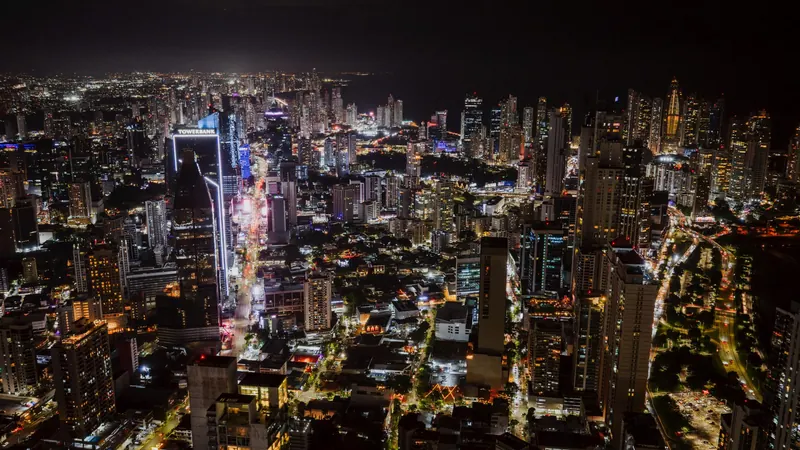
Panama residency requirements by nationality: US, Canadian, Indian and Italian citizens
The legal requirements of each route are the same for every nationality. What changes is whether you can use Friendly Nations and how your documents get authenticated.
- US citizens: you are on the Friendly Nations list, so all routes are open to you. Your criminal record is the FBI Identity History Summary, apostilled. The Panamanian consulate in Washington authenticates documents at USD 30 each, but it can only authenticate US-issued birth and marriage certificates.[1]
- Canadian, UK and EU citizens: all routes are open, Friendly Nations included. You need a national-level police certificate from your country, apostilled or authenticated by the Panamanian consulate there. A certificate issued by your consulate in Panama is usually not accepted.
- Indian citizens: India is not among the Friendly Nations countries, so the Friendly Nations route is closed to you. Your realistic options are the Pensionado visa if you have a qualifying pension, economic solvency, Qualified Investor, reforestation, the professional route, or a job with a work permit. Depending on your passport, you may also need a visa just to enter Panama, and we check that first.
- Italian citizens: a friendship treaty approved by Law 15 of 1966 gives Italians a separate residency route based on a business or employment tie in Panama. It generally carries no repatriation deposit.
- Spanish and many Latin American citizens: where Panama has a reciprocity arrangement with your country, the wait for naturalization can be shorter than five years.
If you are unsure where your passport falls, send us a copy through the contact options below. We will tell you which routes are open before you spend money on documents.
How the residency process works with a Panamanian immigration attorney
Most residency applications are filed in Panama by a Panamanian immigration attorney acting under your power of attorney. For the Pensionado visa, the embassy states that the application cannot be made through its offices and must go through a lawyer in Panama.[1] The digital nomad visa is the exception: Panamanian law does not require a licensed lawyer for every visa application.[9]
When we handle a file, most of the preparation happens remotely. We review your documents by email before anything is apostilled, so you make one trip to Panama with a complete file.
- Choose the route and plan the documents
Your attorney confirms which route fits you and gives you a checklist with the validity window for each document. Allow about a week. - Gather and authenticate documents at home
You obtain the criminal record, pension letter or proof of investment, and birth and marriage certificates. Each one is apostilled, or authenticated by a Panamanian consulate if your country does not use apostilles. This usually takes 3-8 weeks, and the FBI check is often the slowest item. - Remote review and translation
You email scans for review. Documents not in Spanish are translated by a public translator in Panama. Name mismatches between your passport and civil records are fixed at this stage, not at the immigration counter. - Put the qualifying basis in place
Property routes need a registered purchase, and deposit routes need the bank certificate. Employment routes need the contract and, in most cases, the Ministry of Labor permit first. - Trip to Panama and filing
You sign the power of attorney, get a health certificate from a Panamanian doctor, sign a sworn statement, register your passport, and are photographed by the SNM. Plan on one to two weeks in the country. You must be in Panama when the visa is issued.[1] - Waiting period
You receive a temporary card at filing, and you can request a multiple-entry permit if you need to travel. Leaving Panama while your file is pending without that permit can lead to a fine of around USD 2,000. - Approval and card
The SNM issues the resolution and your residence card. Provisional residents repeat a shorter version of this process to convert to permanent residency.
Criminal record certificates are generally accepted only if they were issued within the last six months. Some Friendly Nations checklists ask for three months. Order the check so it is still fresh on your filing date, not on the day you first contact a lawyer. Expired documents, missing apostilles and inconsistent name spellings cause most delays.

Moving to Panama: the legal checklist
Moving to Panama legally means sorting out three things in the right order: how you enter, which residency you file, and what follows you from home, especially taxes. Many people arrive as tourists and change status inside Panama, which the law allows.[1]
Entering as a tourist
US citizens need no visa to enter Panama. You need a passport valid for at least three months and a round-trip ticket.[1] Officers may also ask for proof of about USD 500 in funds. US and Canadian citizens are generally allowed to stay up to 180 days. Tourist status does not allow you to work, and that generally includes remote work for a foreign employer.
What to prepare before you fly
- Passport valid for at least six months, with blank pages
- Apostilled national criminal record, timed to your filing date
- Apostilled birth and marriage certificates for every family member applying
- Your qualifying proof: notarized pension letter, bank certificate, employment contract or property documents
- Proof of an address in Panama, such as a lease or utility bill
- Health insurance that covers you in Panama, which is required for the digital nomad visa
- For property routes: a title search before you pay a deposit
Property, banking and driving
If your residency depends on a property purchase, the title check matters as much as the visa. About 90% of the land outside Panama City is untitled, as is nearly all coastal and island property, and the US Embassy urges due diligence through a reputable attorney.[10] Our guide to buying property in Panama as a foreigner explains the steps, and our Panama real estate lawyers run the Public Registry check before your money moves.
Opening a bank account and getting a Panamanian driver's license are both generally easier once you hold a residence card. If you plan to run a business, registering a Panama company is a separate step from your residency. A company alone no longer qualifies you for Friendly Nations.
Taxes that follow you
Panama taxes only income earned inside the country, so foreign pensions and remote income are generally not taxed there.[9] US citizens still file with the IRS on worldwide income. For tax year 2026, the foreign earned income exclusion allows up to USD 132,900 per qualifying person.[11] To claim it under the physical presence test, you must be outside the US for at least 330 full days in a 12-month period.[12] Foreign bank accounts above USD 10,000 also trigger FBAR reporting. Our guide to Panama taxes for expats covers tax residency and US filing in detail.
Panama work permit and digital nomad visa
A residence permit does not automatically let you work for a Panamanian employer. Local employment generally needs a separate work permit from the Ministry of Labor (MITRADEL). The digital nomad visa, by contrast, lets you work in Panama only for employers and clients abroad.
Panama work permit
Since April 1, 2023, MITRADEL accepts work permit applications only under Executive Decree 4 of 2023.[13] The two main categories are type 2A, for ordinary staff within 10% of the employer's total workforce, and type 2B, for specialists or technicians within 15%.[14] The employer must first register with the national registry of migrant labor.[14] The published fee is USD 80 for a first permit or renewal and USD 30 for duplicates.[15]
The two quotas generally cannot be combined in the same company. A company using the 15% technical quota must also train local staff. Permits are temporary and renewable. Friendly Nations residents can use a job with a work permit as their qualifying basis, and the foreign professional route generally includes the right to work. Plan on about two to four months for the residence and work permit together. Reserved professions stay closed to foreigners regardless of the permit.
Panama digital nomad visa
The digital nomad visa is officially the Short-Stay Visa for Remote Workers. It was created by Executive Decree 198 of May 7, 2021, published in the Gaceta Oficial on May 20, 2021.[16] As of 2026 it is still listed among the SNM's non-resident permits.[17] You need foreign-source income of at least USD 3,000 a month (USD 36,000 a year) and private health insurance valid in Panama for your whole stay. Travel insurance does not qualify.[9]
The visa lasts nine months and can be extended once for nine more, for a maximum of 18 months.[9] Government fees are USD 250 for the application and USD 50 for the card.[9] You cannot take a local job or serve Panamanian clients, and the visa does not lead to permanent residency.[9] There is no dependent category, so a partner must qualify separately.
Approval can come in about a month once the paperwork is complete, but files with document problems take longer. Staying more than 183 days a year can make you a Panamanian tax resident. If you want to stay long term, plan from the start to move into Friendly Nations or another permanent route.
Panama permanent residency and the path to citizenship
Panama permanent residency lets you live in Panama indefinitely. Pensionado and Qualified Investor applicants get it directly. Friendly Nations, solvency, professional and family applicants get it after a two-year provisional permit, which is the standard length of provisional residence under Decree Law 3 of 2008.[18]
Visa, residence permit, carné and cédula: what each term means
People use "residency visa" and "residence permit" for the same thing: the SNM resolution granting your status. The carné is the residence card that proves it. Provisional residents get a temporary card. Permanent residents receive a Panamanian identity card, the cédula, which is the document banks, notaries and utilities ask for.[3]
Panama permanent residency requirements at conversion
If you started provisional, you apply for permanent status shortly before the two years run out. You must show that the original basis still holds: the property is still in your name, the deposit is still in place, or you are still employed and paying into Social Security. If the reason for your permit ends, that is itself a ground for cancellation.[18]
Keeping your status
The SNM may cancel permanent residency if you are absent from Panama for more than two years, unless the absence was justified and authorized.[18] The safe practice is to enter Panama at least once every two years and stay more than 24 hours. A connecting flight does not count as a visit. Investment-based residents must also keep the investment for the required period, usually five years.
Citizenship by naturalization
The Constitution allows naturalization after five consecutive years of residence. You must declare your intention, expressly renounce your nationality of origin, and prove you speak Spanish and know Panama's basic geography, history and political organization.[19] The wait is three years if you have a Panamanian spouse or a child born in Panama to a Panamanian parent.[19] The period is generally counted from the date of your permanent residency resolution. The process often takes a year or more after filing.
Panama does not sell citizenship. Check how your home country treats the renunciation before you apply. Our guide to Panama citizenship by investment explains what investors can actually get and the realistic path to a passport.
Panama residency cost: what you will really pay
Excluding the investment itself, Panama residency typically costs a single applicant about USD 1,500-5,000. A Pensionado file is usually at the lower end, Friendly Nations sits in the middle to upper range, and the Qualified Investor route costs more because of higher government charges. Each dependent adds fees and paperwork.
| Item | Typical cost (2026) | Notes |
|---|---|---|
| Immigration fee (National Treasury) | USD 250 per applicant | Friendly Nations, solvency, family and most provisional routes; paid by certified check; generally not charged to Pensionado applicants |
| Repatriation deposit (SNM) | USD 800 per applicant | Same routes; children under 12 and spouses of Panamanians are generally exempt; not charged to Pensionado applicants |
| Qualified Investor government charges | Generally about USD 5,000 fee plus USD 5,000 deposit for the main applicant; about USD 1,000 plus USD 1,000 per dependent | Investor categories only; confirmed in your quote |
| Digital nomad visa fees | USD 250 application plus USD 50 card | Non-refundable |
| Work permit (MITRADEL) | USD 80 first issue or renewal | Only if you will work for a Panamanian employer |
| Document authentication | USD 30 per document at the Washington consulate; apostille fees set by the issuing state | 3-5 documents per applicant is typical |
| Local items | Public translator, Panamanian health certificate, notarized copies, photos | Ask for a quote that lists them, or that includes them in the legal fee |
| Attorney fees | Market range about USD 1,000-4,000 per main applicant | Depends on route and family size; we quote a fixed fee after a short consultation |
| Total, one applicant, excluding the investment | About USD 1,500-5,000 | Pensionado files can come in around USD 1,200-2,500; Friendly Nations USD 2,000-5,000; Qualified Investor adds the government charges above |
Figures as of October 2026. Government fees and deposits are paid by certified check and can change by decree. Investment-route budgets should also include property closing costs or bank requirements.
If you buy property to qualify, closing costs and transfer taxes come on top of the purchase price. Our breakdown of Panama property taxes and closing costs shows who pays what. The repatriation deposit is a deposit, not a fee: it guarantees the cost of returning you home if your status is cancelled.
The firm handles residency files remotely for a fixed fee agreed before you start. Your quote lists the government charges for your route and family separately, and you can begin through the contact options at the end of this page.
Have us handle it
Tell us your situation: we'll tell you which visa fits (24h reply)
A Panamanian lawyer reviews your situation and replies within 24 hours with next steps and a fixed-fee quote.